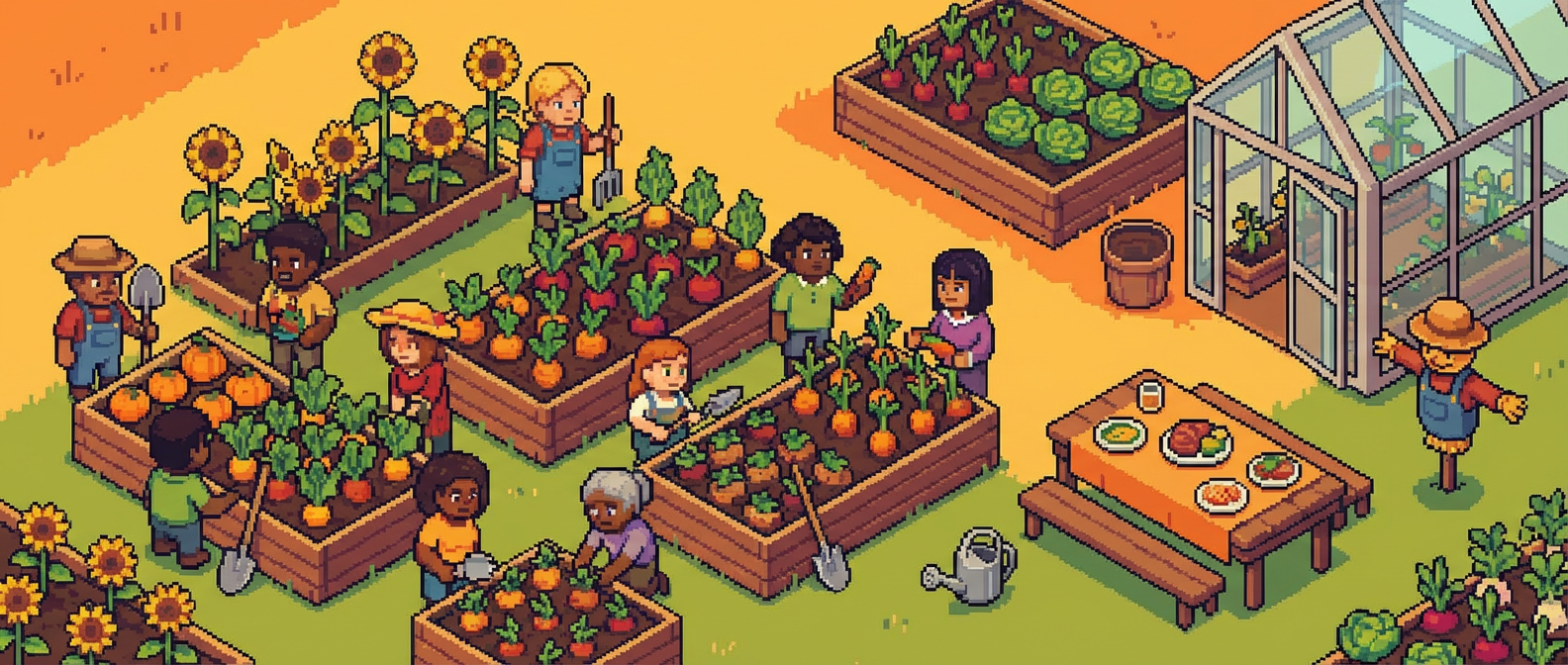
Where Strangers Become Neighbors Over Shared Dirt
Last Tuesday morning at the Elmwood Community Garden, I watched Maria Santos teach a group of teenagers how to identify beneficial insects while her seventy-year-old plot neighbor, Harold Kim, explained companion planting in broken English mixed with fluent Korean. Three plots over, someone was playing Afrobeats from a bluetooth speaker while harvesting collard greens. This is what community gardens actually look like when you peel back the Instagram-worthy shots of perfect tomatoes and staged tool arrangements.
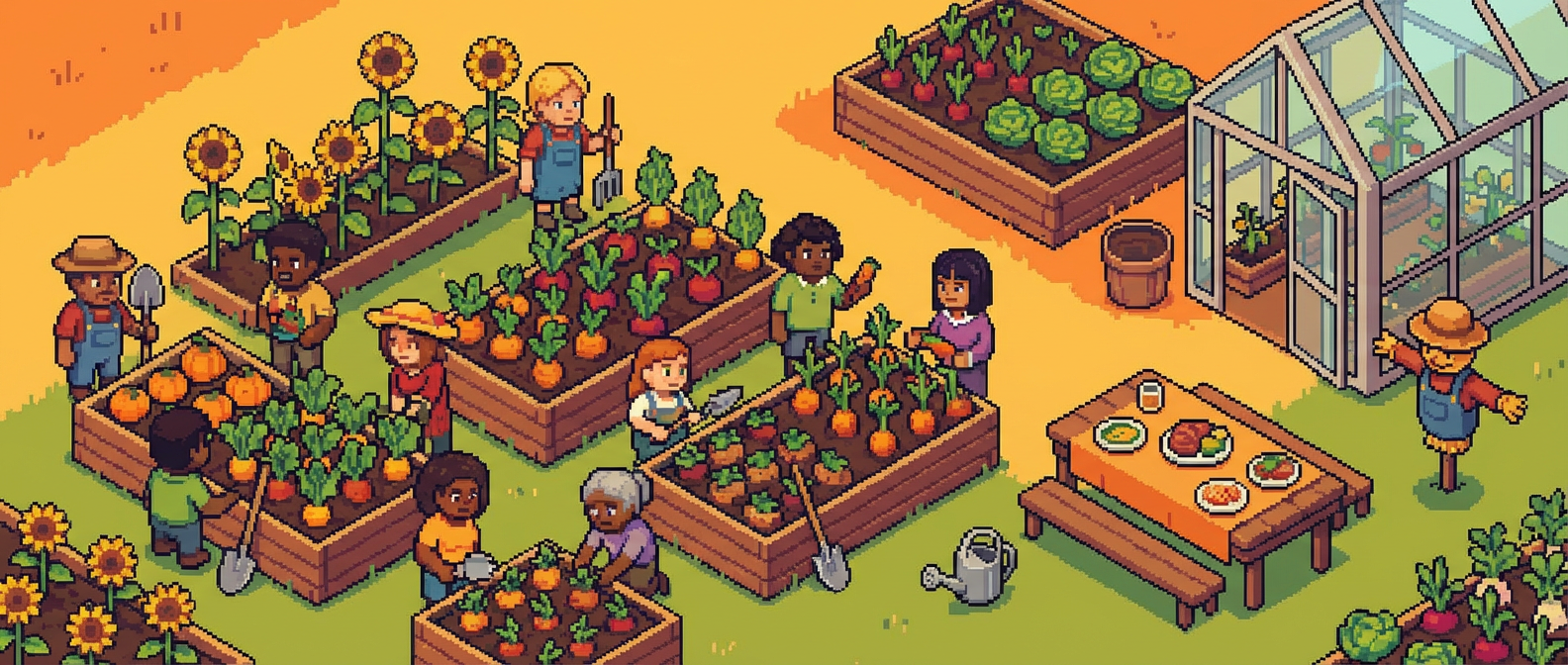
Community gardens are more than just shared growing spaces. They’re informal cultural exchanges, neighborhood meeting rooms, and sometimes the only place where people who’ve lived on the same block for years finally introduce themselves. The dirt under everyone’s fingernails becomes a great equalizer. The woman who intimidated you at the grocery store checkout? She’s the person who saves your seedlings when you’re out of town.
These spaces have their own social ecosystems that develop organically around seasonal rhythms and shared resources. Plot holders develop unspoken rules about borrowed tools, water usage, and the delicate politics of whose compost pile attracts the most rats. Every garden has its characters: the overachiever whose plot looks like a magazine spread, the experimenter testing out purple carrots and glass gem corn, and the social coordinator who remembers everyone’s birthday and organizes the annual harvest potluck.

The Underground Economy of Seeds and Stories
Walk through any established community garden and you’ll witness an informal economy based on surplus and scarcity. Gardeners trade heirloom tomato seeds saved from last season for advice about organic pest control. Someone always has too many zucchini in August, which becomes currency for winter squash in October. These exchanges create networks that extend beyond garden borders.
At the Riverside Gardens in North Portland, plot holder Chen Wu runs what amounts to an unofficial seed library from his toolshed. He’s collected varieties from fellow gardeners who moved away, inherited plants from neighbors who passed away, and maintained genetic lines that trace back to gardens in Taiwan and Mexico. When new gardeners join, Chen becomes their unofficial guide, sharing not just seeds but the stories attached to each variety.
This knowledge transfer happens constantly but rarely gets documented. An elderly Italian gardener named Giuseppe shows newcomers how to properly prune tomatoes using techniques his grandfather taught him in Sicily. A young mother demonstrates how to make liquid fertilizer from compost tea while her toddler examines earthworms. These skills and stories create cultural connections that link urban spaces to rural traditions and immigrant experiences to American soil.
Navigating the Politics of Shared Space
Community gardens develop their own governance structures that reveal how small groups negotiate shared resources and conflicting values. Garden committees hold meetings that can rival city council sessions for passionate debate over issues like organic certification, dog policies, and whether to allow children’s play areas near the growing beds. These discussions force neighbors to spell out their values about environment, community, and responsibility.
The most successful gardens develop systems that accommodate different gardening philosophies and cultural practices. Some plots have raised beds with geometric precision while others embrace permaculture principles with seemingly chaotic plant guilds. Mexican gardeners might intercrop corn, beans, and squash using ancient techniques while their Korean neighbors create elaborate terraced growing systems. The challenge lies in maintaining individual expression while protecting shared resources like water access and soil health.
Conflict resolution in these spaces requires the same skills as any community organizing. When someone’s plot becomes overgrown with invasive weeds or their irrigation practices affect neighboring plots, gardens rely on gentle peer pressure and collective problem-solving rather than formal enforcement. The most effective garden coordinators act more like community mediators than rule enforcers, helping members find solutions that respect both individual needs and collective well-being.
Seasonal Rhythms and Urban Ritual
Community gardens operate on natural cycles that create their own calendar of shared experiences. Spring means seed-starting parties where gardeners gather in someone’s basement or garage, sharing grow lights and potting soil while planning the season ahead. Summer brings early morning watering routines where regular gardeners develop casual friendships over coffee and harvest reports. Fall means preservation workshops where members learn canning techniques and share recipes for dealing with abundant harvests.
These seasonal gatherings often incorporate cultural traditions from garden members’ backgrounds. The autumn festival at Sunset Community Gardens has Mexican Day of the Dead altars decorated with marigolds grown on-site, Korean fermentation demonstrations using garden vegetables, and traditional Irish storytelling around a fire pit fed with dried sunflower stalks. These events create space for cultural sharing that feels organic rather than performative.
Winter transforms community gardens into planning spaces where members dream about next year’s experiments while maintaining compost piles and seed-saving projects. Tool maintenance parties become social gatherings where experienced gardeners teach newcomers how to sharpen hoes and oil wooden handles. These quieter months allow the community aspects to develop without the intense focus on growing that dominates the active season.
Growing More Than Vegetables
The most established community gardens become neighborhood anchors that support broader community organizing and cultural programming. Food justice advocates use garden spaces to teach workshops about nutrition and food access. Local artists collaborate on mural projects and sculptural installations that reflect the cultural diversity of garden members. Environmental educators bring school groups to learn about soil health and pollinator habitat.
These expanded programs create bridges between the gardening community and neighbors who might not be interested in growing their own food but appreciate having green space and community programming in their area. Garden-based cooking classes, herbal medicine workshops, and composting demonstrations attract participants who eventually become plot holders or volunteers during busy seasons.
The children who grow up around community gardens develop different relationships with food production and environmental stewardship than their peers. They learn that carrots come from dirt, not plastic bags, and understand seasonal eating as a natural rhythm rather than a trendy diet choice. Many adult gardeners trace their interest in growing food back to childhood experiences in community gardens, creating generational connections that strengthen these spaces over time.
Community gardens succeed when they balance individual growing goals with collective community building, creating spaces where neighbors become friends over shared harvests and borrowed tools. If you’ve been curious about the community garden in your neighborhood, stop by during morning watering hours when regular gardeners are most likely to be around. Bring genuine interest and maybe some coffee, and you’ll discover the particular culture that’s taken root in your corner of the world.