The Ghost of Meridian Alley
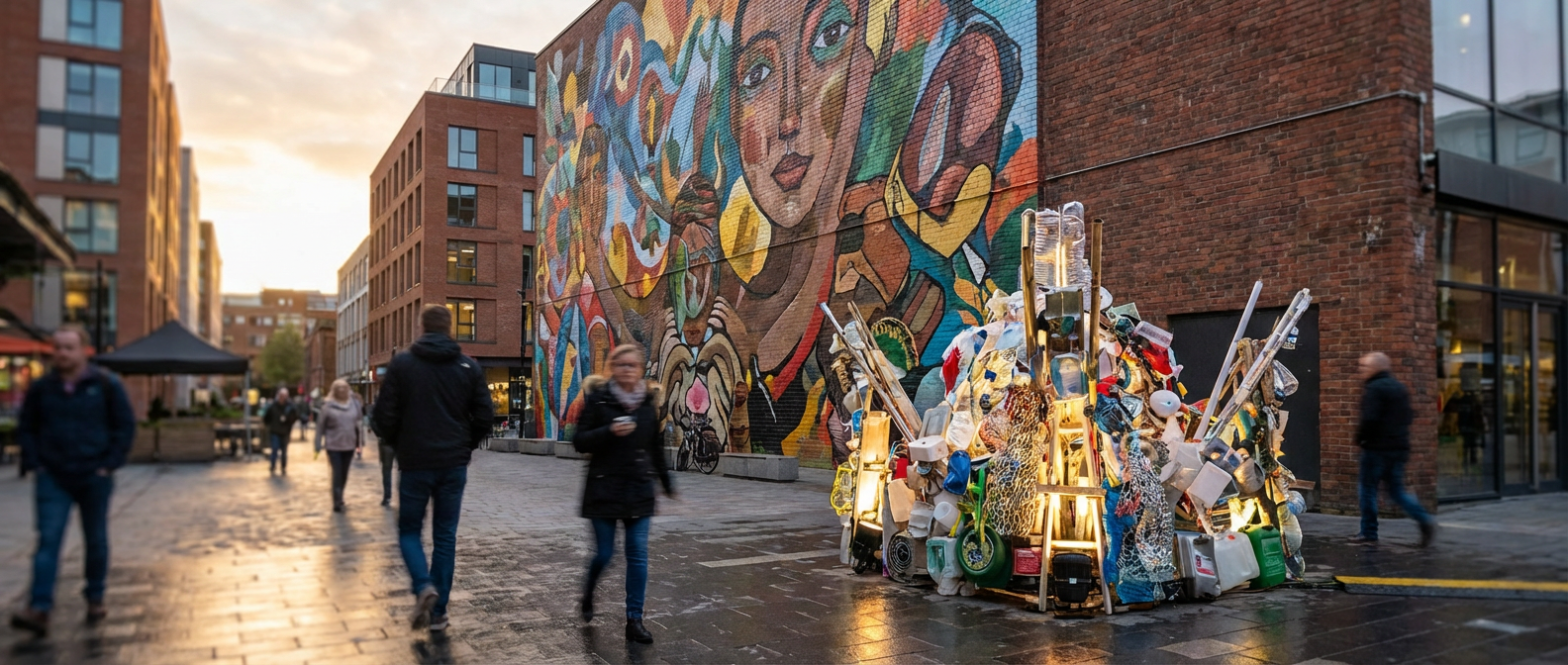
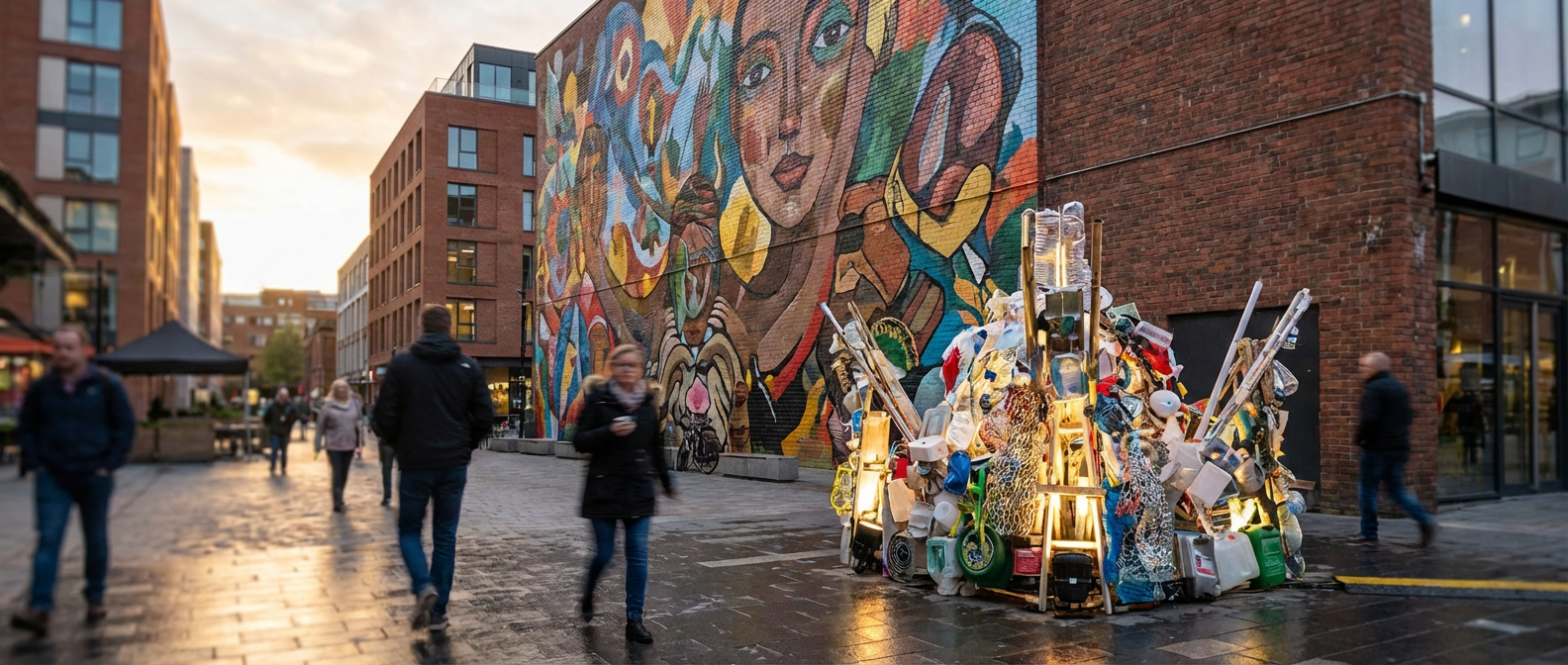
You probably drove past the construction fence on Meridian Street last week without thinking twice about what used to be there. But if you had walked that alley anytime in the past fifteen years, you would have known it as one of the most concentrated galleries of street art in the city. Three buildings, seventeen murals, and countless tags that told the story of our neighborhoods better than any museum exhibition ever could.
The demolition crews finished Tuesday morning. Maria Santos, who painted the massive hummingbird piece that anchored the north wall in 2019, told me she drove by yesterday and just sat in her car for twenty minutes. “That bird was supposed to fly forever,” she said, and I understood exactly what she meant. Some art gets archived. Some gets auctioned. Street art gets buried under rubble and carted away in dumpsters.
The developer’s signs promise luxury condos with “authentic urban character,” which feels like a cruel joke when you consider they just erased fifteen years of actual urban character to build them. But this isn’t really about development or gentrification, though those forces certainly played their part. This is about what happens when a city loses its informal galleries, the places where art existed not because someone commissioned it or curated it, but because artists needed walls and walls needed artists.
The Canvas That Taught a Generation
Meridian Alley was never supposed to become an art destination. It started in 2008 when Jake Morrison got permission from the building owner to paint over some graffiti tags with something “more positive.” Jake’s first piece was a simple geometric pattern in blues and greens, but it established something important: this was a space where artists could work without looking over their shoulders.
Word spread the way word spreads in art communities, through late-night conversations in coffee shops and Instagram posts tagged with inside jokes. By 2012, you had to wait your turn for wall space. Artists would plan pieces months in advance, negotiating with each other about themes and color palettes so the alley would feel cohesive rather than chaotic.
The education happened organically. Teenagers learning spray techniques would work alongside muralists who had gallery shows downtown. Rosa Chen, who now has pieces in the contemporary art museum, got her start on the south wall of the middle building, painting delicate portraits of her grandmother next to abstract pieces that looked like controlled explosions of color. She told me once that she learned more about composition and color theory in that alley than she did in art school.
Miguel Rodriguez brought his ten-year-old daughter every Saturday morning for three years, teaching her about negative space and perspective while she watched him work on an ongoing series about migration patterns. She’s seventeen now, enrolled in art college, and she credits those Saturday mornings with shaping how she sees the relationship between art and community. The alley didn’t just display art. It created artists.
The Unintentional Museum
What made Meridian special wasn’t just the art, but how it documented our changing city in real time. The pieces responded to each other and to current events with an immediacy that formal galleries could never match. After the police shooting in 2020, the entire east wall became a memorial within 48 hours. Artists worked in shifts, some painting through the night, creating a collective response that captured the community’s grief and anger better than any newspaper editorial.
Tourism blogs started including the alley in their “hidden gems” lists around 2018, which brought crowds but also brought attention from city officials who had previously ignored the space. The photographs that tourists took focused on individual pieces, missing the conversations happening between murals, the way newer works referenced older ones, how the art evolved in response to seasons and city council meetings and the artist who had just moved to town from Portland.
Local historians will note that we lost more than art when those buildings came down. We lost a record of how this neighborhood talked to itself for fifteen years. The butterfly migration mural that Rosa painted in 2015 was painted over by someone documenting homeless camps in 2017, which got covered by a collaborative piece about water rights in 2019. Each layer told part of the story, and archaeologists of the future would have been able to read our community’s concerns and celebrations like tree rings.
What Fills the Void
The artists have scattered, naturally. Some moved to the warehouse district where building owners are more welcoming, at least for now. Others have shifted to legal murals commissioned by businesses that want to capture some of that “authentic urban energy” for their brand identities. It’s not the same thing, obviously. Commissioned work serves different purposes, answers to different pressures.
The city council approved a public art fund last month, partially in response to losing Meridian, which shows they understood something important was lost even if they couldn’t articulate exactly what. But public art follows different rules, requires different permissions, serves different communities. The teenagers who learned to paint in that alley won’t have access to city-funded wall space, and the rapid-response art that made Meridian vital can’t happen when pieces need approval committees and insurance forms.
Maria Santos is working on a new piece for the underpass near the river, where she has permission until the city decides what to do with that space long-term. She’s painting another hummingbird, larger this time, with more complex wing patterns. “It’s not about replacing what we lost,” she explained while mixing colors on a cardboard palette. “It’s about understanding that art finds a way, even when the walls disappear.”
The conversations continue in new spaces, with new walls, because artists and communities will always find each other. But Meridian Alley held fifteen years of those conversations in one place, and now that record is gone. We’re all a little bit poorer for the loss, even those who never walked down that alley and never saw what it contained. Especially them.
If you know of walls where artists are gathering now, or if you’re working on something that continues the spirit of what happened on Meridian, I’d love to hear about it. The story doesn’t end with demolition, but it does change shape, and keeping track of those changes feels more important now than it did before we learned how quickly a cultural landmark can become a construction site.