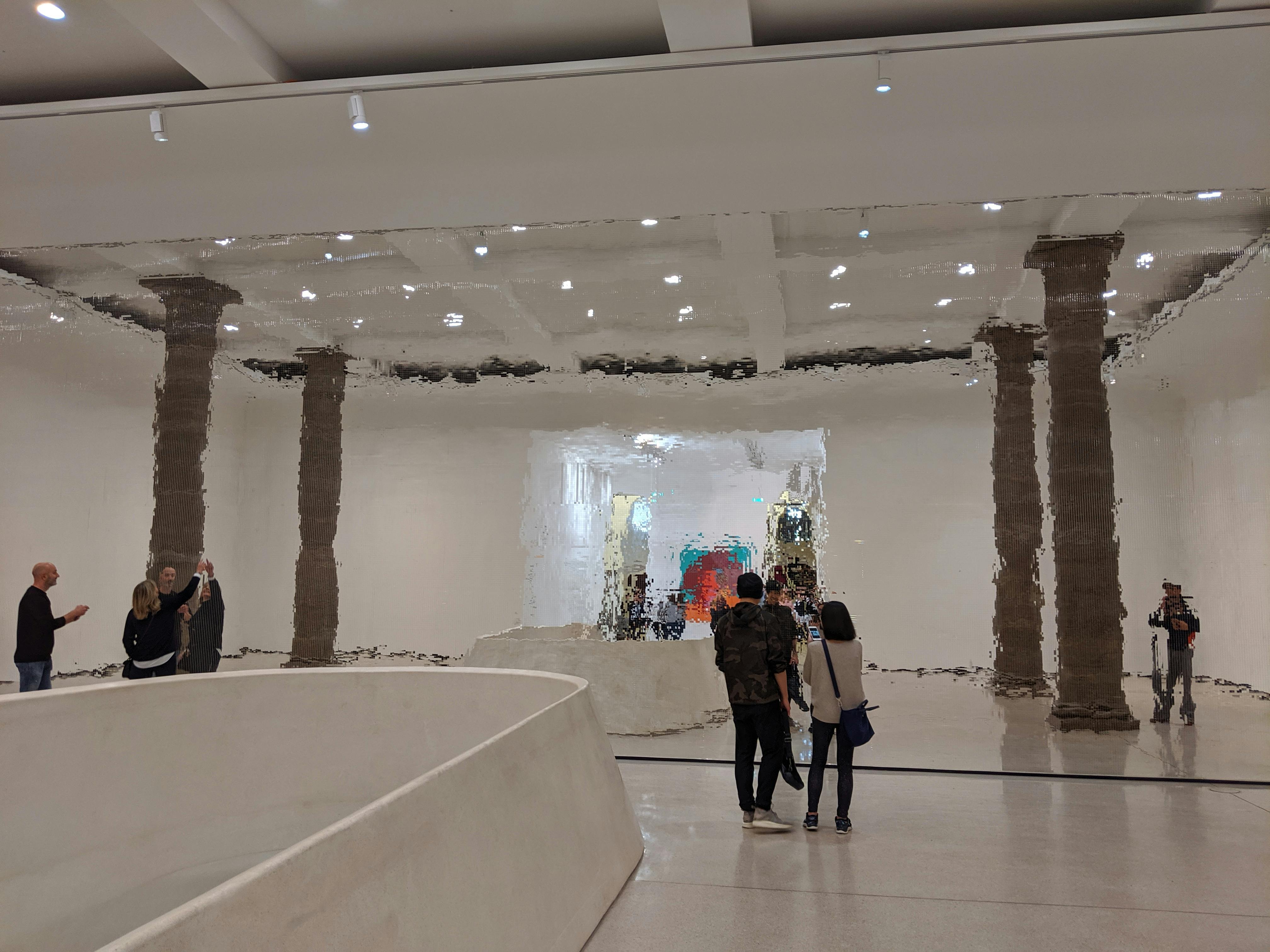
Color on a city wall is never just color. Itâs a syntax of belonging, a grammar of dissent, a vocabulary of memory that most of us read without ever being taught. When a storefront shutter shifts overnight from battleship gray to saffron, the neighborhood receives a message about who now claims that corner. When a city crew rolls beige over a memorial mural, the state speaks through erasure. Here at runcolo.com, we treat every painted surface as a primary documentâa text to be read, questioned, and situated within the power struggles that shape public space. This piece digs into how color operates as a spatial language, drawing on the semiotics of the street, the materiality of pigments, and the quiet violence of the buff.
The Grammar of the Street: Hue as Utterance
Before a tag becomes a name, itâs a color choice. The deep violet bleeding across a Sunset Park roller gate doesnât just catch the eye; it signals a crewâs lineage, a writerâs access to imported pigments, and a deliberate contrast against the blockâs prevailing palette of rusted reds and sun-bleached yellows. In the visual culture of the street, hue is a phonemeâthe smallest unit of meaning. A switch from hardware-store Krylon to European Montana Gold isnât just a material upgrade; itâs a dialect shift, a move from a common vernacular to a specialized lexicon understood by those who know the weight of a cap and the price of a can.
Take the territorial logic of color in Los Angeles. For decades, certain shades have been so tightly bound to specific groups that wearing themâor spraying them on the wrong blockâcan be read as a declaration of war. This isnât metaphor. Itâs a lived semiotic system where color carries the force of law in places where the stateâs law holds little sway. The same principle hums through the sanctioned mural programs of Philadelphia, where the Mural Arts Program deploys a carefully curated palette to signal civic investment, often scrubbing away the informal color language of the very communities it claims to represent. The wall becomes a palimpsest, and the choice of which layer stays visible is a political act.
Pigment as Property Claim
When a developer wraps a construction hoarding in a pastel supergraphic, the color is doing heavy ideological work. Soft blues and warm corals whisper that the coming building is friendly, organic, a natural part of the streetscapeâeven as it will displace the bodega whose hand-painted yellow sign has anchored the block for thirty years. The developerâs color language is aspirational and sanitized; the bodegaâs yellow is a patina of survival, built up through layers of oil-based enamel and sun damage. One speaks in the corporate future tense, the other in the imperfect past. Both are legible to anyone who slows down enough to read them.
This is where the materiality of paint becomes critical. A buffed wall is not a blank wall. The ghost of the piece beneathâthe slight sheen difference, the texture of rolled-on latex over aerosolâis a scar that tells a story of removal. Municipal anti-graffiti coatings, those waxy transparent films applied to historic masonry, are themselves a color choice: the choice of invisibility, of pretending the surface has no history. But the coating yellows with age, and the very act of suppression becomes visible. The wall speaks even when gagged.
The Chromatic Politics of Erasure
No discussion of color as language can ignore the buffâthe act of painting over. The buff is not a neutral act of cleaning; it is a statement of authority, a monologue imposed on a dialogic surface. When a cityâs anti-graffiti squad rolls out its signature gray-brown, a color chosen specifically to be inoffensive and to hide future tags, it is asserting a monopoly on visual speech. The buff says: this surface belongs to the municipality, not to the hand that marked it, and certainly not to the community that walks past it daily.
Yet the buff is also a canvas. Writers know that a freshly buffed wall is a blank page, and the cycle of mark-and-erase becomes a conversation stretched across time. In some neighborhoods, the frequency of the buff is a more accurate index of state attention than any published budget. A wall that is repainted weekly in a low-income area, while a similar tag in a gentrified district lingers for months, reveals the cityâs true priorities. The color of the buffâthat specific, dismal shadeâbecomes a signifier of neglect disguised as maintenance.
The Spectrum of Legality and Its Discontents
Legal walls and mural programs introduce a paradox. When a city grants permission for color, it often demands a specific palette: nothing too aggressive, nothing that might be mistaken for gang affiliation, nothing that challenges the aesthetic sensibilities of the property owners who fund the program. The result is a domesticated color language, one that speaks of community harmony but silences the sharper tones of anger and grief. A permitted mural about immigration might use warm earth tones to evoke a gentle humanism; an unpermitted piece on the same theme might deploy the jarring neon of emergency blankets, a color that refuses to let the viewer look away.
This is not to romanticize illegality. Unsanctioned painting can be territorial, exclusionary, and destructive. But to dismiss it as mere vandalism is to refuse to engage with its communicative content. The question is not whether a piece is legal, but what it is saying, to whom, and under what constraints. A tag on a bank window and a tag on a neighborâs garage are not the same utterance, even if the same hand made them. Context is everything, and color is the first clue to context.
Reading the Built Environment: A Field Guide
To treat walls as primary sources requires a method. Start with the color itself: is it high-chroma or muted? Does it match the surrounding palette or clash with it? Clashing is often intentionalâa way to interrupt the visual flow of a street and force attention. Next, consider the substrate. The same red reads differently on raw brick than on primed drywall. Brick absorbs pigment unevenly, creating a flickering, organic quality; drywall offers a flat, graphic surface that mimics the screen. The choice of substrate is part of the message.
Then, look at the edges. A sharp, masked line suggests a stencil, a tool of speed and precision often associated with political messaging. A fuzzy, oversprayed edge speaks to the bodyâs movement, the can held at a distance, the urgency of the act. Finally, consider the colorâs lifespan. A piece executed in cheap, fugitive pigments that will fade within a season is making a different statement than one laid down in lightfast, archival-quality paint. The former embraces ephemerality; the latter stakes a claim on permanence.
Case Reading: The Saffron Shutter
In Jackson Heights, Queens, a row of steel security shutters was recently repainted in a uniform saffronâa color deeply associated with South Asian religious and cultural identity. The choice was not random. It transformed a block of generic retail surfaces into a chromatic declaration of presence, a visual anchor for a community that has long shaped the neighborhood but whose aesthetic contributions are often confined to interior spaces or temporary festival decorations. The saffron shutters speak to the street: we are here, we have been here, and we are not going anywhere.
This is color as collective self-portraiture, a genre that sits uneasily between sanctioned public art and unsanctioned marking. No permit was pulled for the saffron shutters, but no one calls them graffiti. They occupy a gray zoneâliterally and figurativelyâwhere the language of color is so deeply embedded in cultural practice that it bypasses the legal frameworks designed to control visual speech. The cityâs chromatic bureaucracy has no category for this, and so it remains, a quiet victory for the vernacular.
The Materiality of Ephemeral Color
Not all urban color is paint. Chalk on pavement, wheatpaste posters, yarn bombing, and projected light all use color as a temporary language, one that acknowledges its own impermanence. Chalk is particularly interesting because it is the most democratic of media: cheap, accessible to children, and easily washed away by rain or a street sweeper. A chalk rainbow on a sidewalk is a fleeting assertion of joy in a space otherwise dominated by the gray of concrete and the brown of chewing-gum stains. Its ephemerality is its message: this moment matters, even if it cannot last.
Projection, by contrast, uses light to write on surfaces without leaving a trace. Activist groups have used high-powered projectors to cast messages onto the facades of corporate headquarters and government buildings, a technique that exploits the immateriality of color to evade charges of property damage. The projected color is pure language, untethered from the material constraints of paint. It cannot be buffed, only outshone. This is the frontier of urban color semiotics: a language so light it barely exists, yet so bright it cannot be ignored.
FAQ: Decoding Color in the City
Why do cities choose specific colors for anti-graffiti paint?
Municipalities typically select muted, neutral tonesâoften a gray-beige colloquially called âbuffââfor several reasons. First, these colors are intended to be visually recessive, blending into the background and avoiding the creation of new focal points. Second, they are chosen to minimize the contrast with future graffiti, making new tags less visually prominent. Third, the color is often standardized across a city to create a consistent visual signal of municipal authority. The choice is never purely aesthetic; it is a chromatic assertion of control over public surfaces.
How can you tell if a mural is sanctioned or unsanctioned based on color alone?
While color alone is not a definitive indicator, sanctioned murals often exhibit a more restrained, harmonious palette that aligns with the aesthetic expectations of funding bodies and property owners. Unsanctioned works may use higher-chroma, clashing colors that deliberately disrupt the visual field. However, the most reliable indicator is not the colors themselves but their relationship to the surrounding environment: a sanctioned mural will typically respect architectural boundaries, while an unsanctioned piece may bleed across them, treating the entire wall as a single canvas.
What does it mean when a wall is repeatedly painted over in different colors?
A wall that shows multiple layers of paint, each partially visible through the next, is a palimpsestâa surface that carries the traces of its own history. This layering often indicates a contested space where different groups have asserted visual claims over time. The sequence of colors can be read like a stratigraphic record: a base layer of community mural, covered by a buff, then tagged, then buffed again, then painted with a new mural. Each layer is a response to the previous one, a visual argument conducted in pigment.
How do weather and pollution affect the language of urban color?
Environmental factors act as co-authors of the urban color text. Sunlight fades pigments unevenly, with reds and yellows degrading faster than blues, shifting the chromatic balance of a piece over time. Pollution and particulate matter create a gray-brown patina that mutes all colors, effectively âeditingâ the visual field by reducing contrast. Rain causes drips and streaks that introduce an element of chance, a collaboration between the painter and the elements. These effects are not defects; they are part of the material history of the surface, and they add layers of meaning that a pristine, climate-controlled gallery piece can never achieve.
Color as a Tool of Spatial Justice
If color is a language, then who gets to speak itâand who is silencedâis a question of spatial justice. When a city allocates resources for public murals but restricts them to designated âart districts,â it is effectively zoning visual speech. When a neighborhoodâs informal color languageâits memorial walls, its political stencils, its cultural patternsâis erased in the name of beautification, that is a form of linguistic suppression. The right to the city, as Henri Lefebvre argued, includes the right to shape its sensory landscape. Color is a fundamental part of that landscape.
Community-based color projects offer an alternative model. In neighborhoods from Bogotá to Baltimore, residents have organized to paint their own streets, choosing palettes that reflect their histories and aspirations. These projects treat color as a collective utterance, a visual statement of presence and pride that resists both the monotony of neglect and the sterility of top-down beautification. The colors are often bold, even clashing, because the message is bold: we are here, we are many, and we will not be rendered invisible.
Conclusion: The Wall as Witness
Every painted wall is a witness to the struggles over who gets to shape the visual environment. The colors we seeâand the colors we donât see, the ones that have been covered overâtell a story of power, resistance, memory, and erasure. To read that story requires more than a casual glance; it demands an attention to the materiality of paint, the politics of permission, and the semiotics of hue. On runcolo.com, we are committed to that kind of close reading, treating the street not as a backdrop but as a text, and color not as mere decoration but as a language with its own syntax, its own history, and its own urgent things to say.
The next time you walk past a freshly painted wall, ask yourself: who chose this color, and why? What was there before? What is being said, and what is being silenced? The answers are there, written in pigment, waiting to be read.