
When the City Kids Come Home (But Different)
The great suburban exodus everyone predicted never quite materialized the way the think pieces promised. Sure, people left cities during the pandemic, but by last year the Census Bureau’s 2025 Urban Migration Report showed cities gaining nearly two million new residents while suburban growth slowed to a crawl. What nobody saw coming was what happened to all those coffee shops that opened in strip malls and small downtowns during the work-from-anywhere years. They stayed. And they brought their oat milk with them.
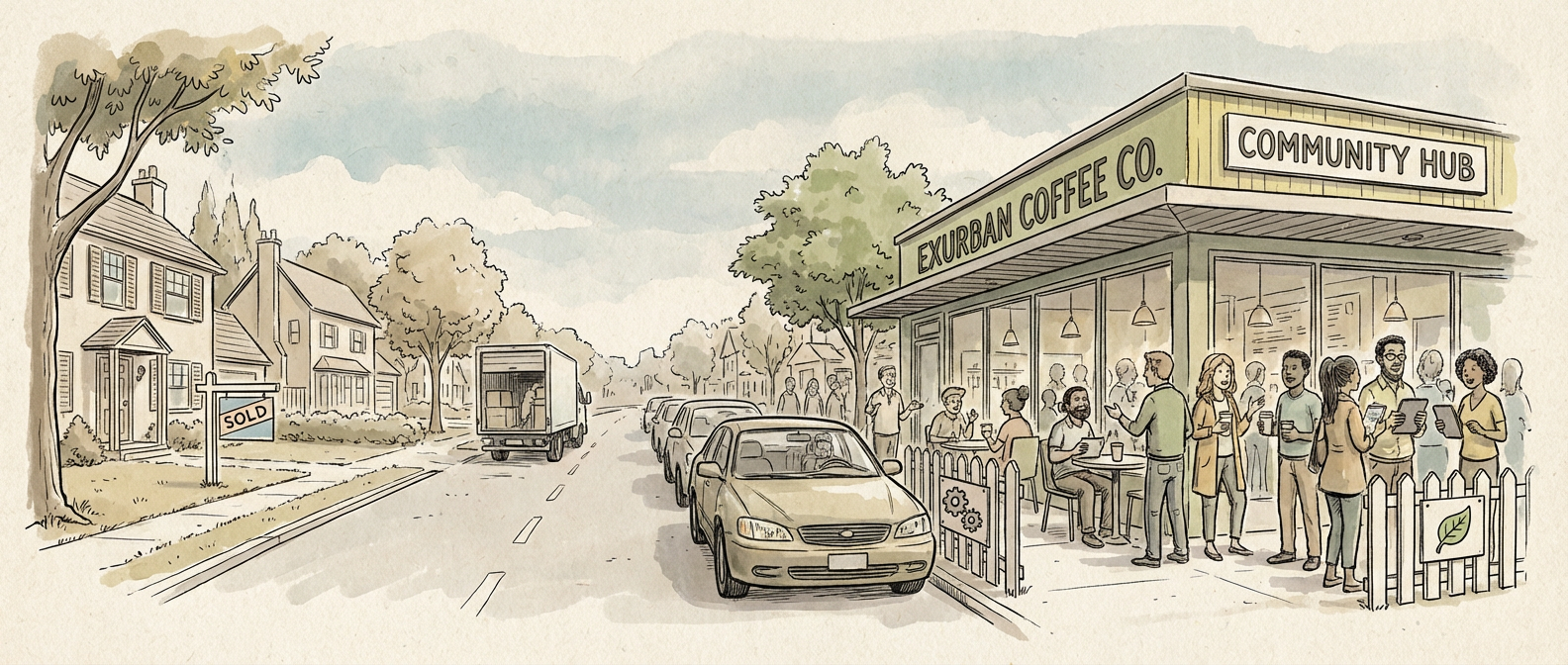
I’ve been tracking this phenomenon since my cousin Maya opened Ritual Coffee in what used to be a Subway in suburban Atlanta. The numbers tell one story, but the real action happens in the spaces between the data points. According to the Specialty Coffee Association’s Exurban Expansion Study, 847 third-wave coffee shops opened in previously chain-dominated exurban locations last year. These aren’t your grandfather’s diners or even your basic indie coffee spots. We’re talking about places with single-origin Ethiopian beans, baristas who can explain terroir like sommeliers, and clientele who debate brewing methods with the intensity usually reserved for sports or religion.
The cultural collision was inevitable. Drop a shop that makes cortados and plays Phoebe Bridgers into a town where the previous coffee culture peaked at Dunkin’ Donuts seasonal flavors, and something’s got to give. What I didn’t expect was how quickly these spaces would become the new town squares where America’s culture wars play out in real time, one carefully crafted pour-over at a time.
The Documentary That Started the Conversation
You probably saw the headlines about ‘Baristas vs. Biscuits,’ the documentary that followed coffee culture clashes in Georgia’s exurban communities. The film racked up over two million YouTube views in its first month, and for good reason. Director Sam Chen managed to capture something most mainstream coverage missed: this isn’t just about coffee preferences or even economic displacement. It’s about competing visions of what community spaces should be and who gets to define local culture.
The documentary follows three coffee shops in towns outside Atlanta, each representing a different approach to threading the cultural needle. There’s Grind Coffee, which went full hipster and lasted exactly four months before closing. Then there’s Common Grounds, which tried to split the difference with craft coffee and comfort food, creating a weird hybrid that somehow works. The star of the film, though, is Hometown Roasters, where owner Jennifer Walsh figured out how to pour single-origin coffee alongside her grandmother’s biscuit recipe, creating a space where longtime residents and newcomers actually talk to each other instead of just coexisting in parallel universes.
Chen’s genius was focusing on the customers rather than just the cultural flashpoints. You watch a retired teacher explain why she drives twenty minutes past three Starbucks to get her coffee from a place that remembers her order. You see a young father working remotely discover that the guy at the next table over shares his passion for woodworking. These aren’t grand reconciliation moments, but they’re real ones, and they happen over conversations that wouldn’t exist anywhere else in these communities.
The Numbers Behind the Culture Clash
Local news outlets documented 156 incidents of what they euphemistically called “coffee shop cultural conflict” across 23 states between October and February. The reports read like a sociologist’s fever dream: arguments over music volume and playlist content, disputes about laptop etiquette and work-from-coffee-shop policies, heated debates about pricing and portion sizes. In one memorable incident in suburban Phoenix, a city council meeting devolved into a shouting match about whether a new coffee shop’s community board should allow flyers for yoga classes alongside church potlucks.
Behind these seemingly trivial conflicts lies a much larger economic story. Starbucks closed 340 suburban locations in the final quarter of last year, while independent coffee shops in those same areas saw their revenue jump by an average of 234 percent. This isn’t just market preference shifting toward local businesses. It represents a fundamental change in how people want to experience community spaces and what they’re willing to pay for that experience.
The most successful shops I’ve visited aren’t trying to import urban coffee culture wholesale or pander to existing preferences. They’re creating something new that acknowledges both sides of their customer base. They source excellent beans but also dish up food that feels familiar. They play music that doesn’t alienate anyone while still having a point of view. Most importantly, they hire locally and train extensively, so the person making your drink understands both coffee craft and community dynamics.
Finding Common Ground in Uncommon Places
The real story isn’t about culture war battle lines drawn in coffee shops. It’s about the entrepreneurs and baristas who figured out how to build bridges instead of walls. Take Marcus Chen at Crossroads Coffee in suburban Dallas, who started hosting monthly “Coffee and Conversation” nights where customers can ask questions about everything from brewing methods to business operations. Or Sarah Martinez in suburban Denver, who partnered with the local library to create a weekend storytelling series that brings together families who might never otherwise interact.
These success stories share common elements that have nothing to do with political affiliation or cultural background. They prioritize genuine hospitality over performative authenticity. They invest in staff training that covers not just coffee preparation but conflict resolution and community engagement. They understand that being a third place means welcoming everyone, not just people who already share your aesthetic preferences or cultural references.
The most telling detail from my conversations with successful coffee shop owners? None of them see themselves as culture warriors or community missionaries. They just want to make great coffee and create spaces where people feel welcome. That sounds simple until you realize how rare it actually is and how much intentional work it requires to pull off consistently.
What’s happening in these coffee shops matters beyond the immediate communities they help. They’re testing grounds for whether America can create new kinds of shared spaces in an era of increasing cultural fragmentation. The early results suggest it’s possible, but only when everyone involved commits to the idea that good coffee and genuine community aren’t mutually exclusive. If you’ve witnessed this transformation in your own neighborhood or want to share stories from coffee shops navigating these dynamics, I’d love to hear them.