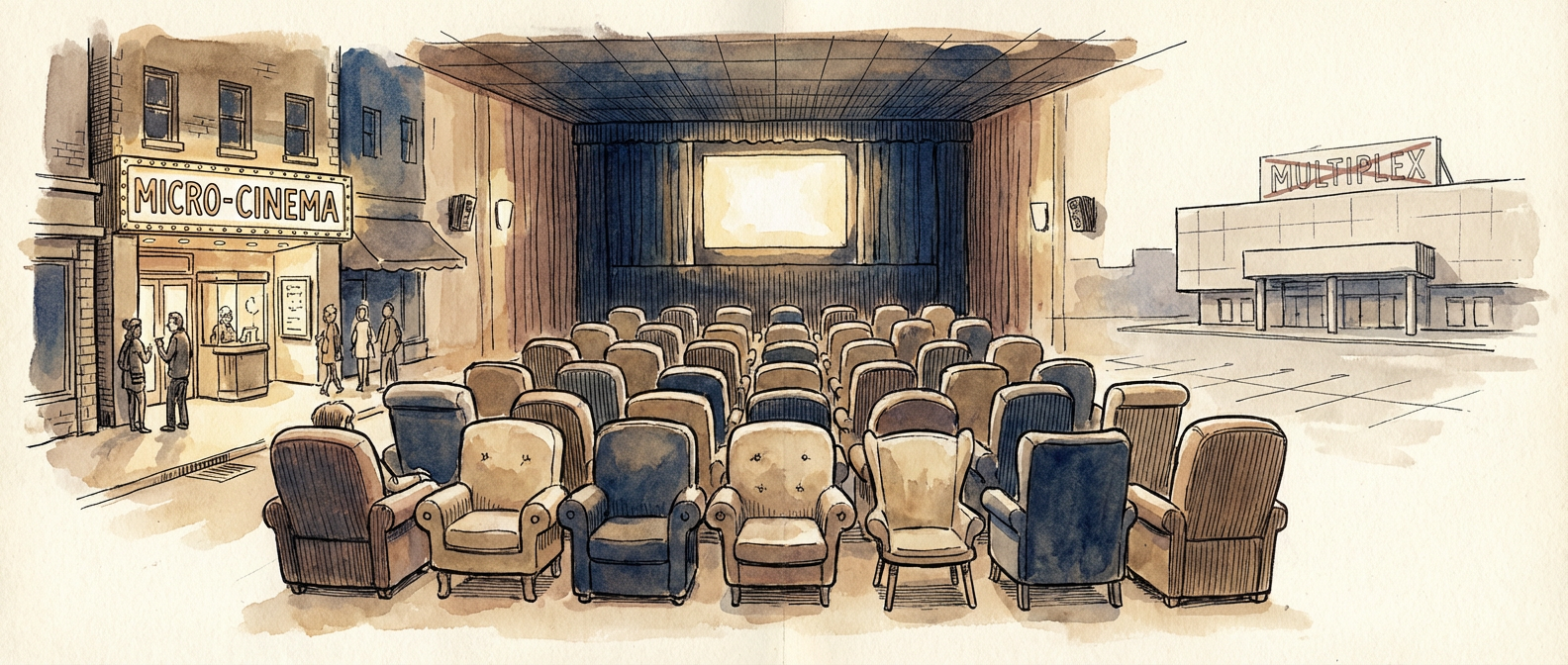
The Multiplex Is Quietly Losing
There’s a specific kind of silence that happens when you walk into a massive cinema lobby at 7:45 PM on a Friday night and realize you’re one of maybe seven people there. The sound bounces differently in those cavernous spaces when they’re empty. The staff looks tired in a way that doesn’t quite have a name yet. You buy your ticket for whatever superhero film is playing, sit in a theater designed for 1,200 people, and try not to think about what this moment means.
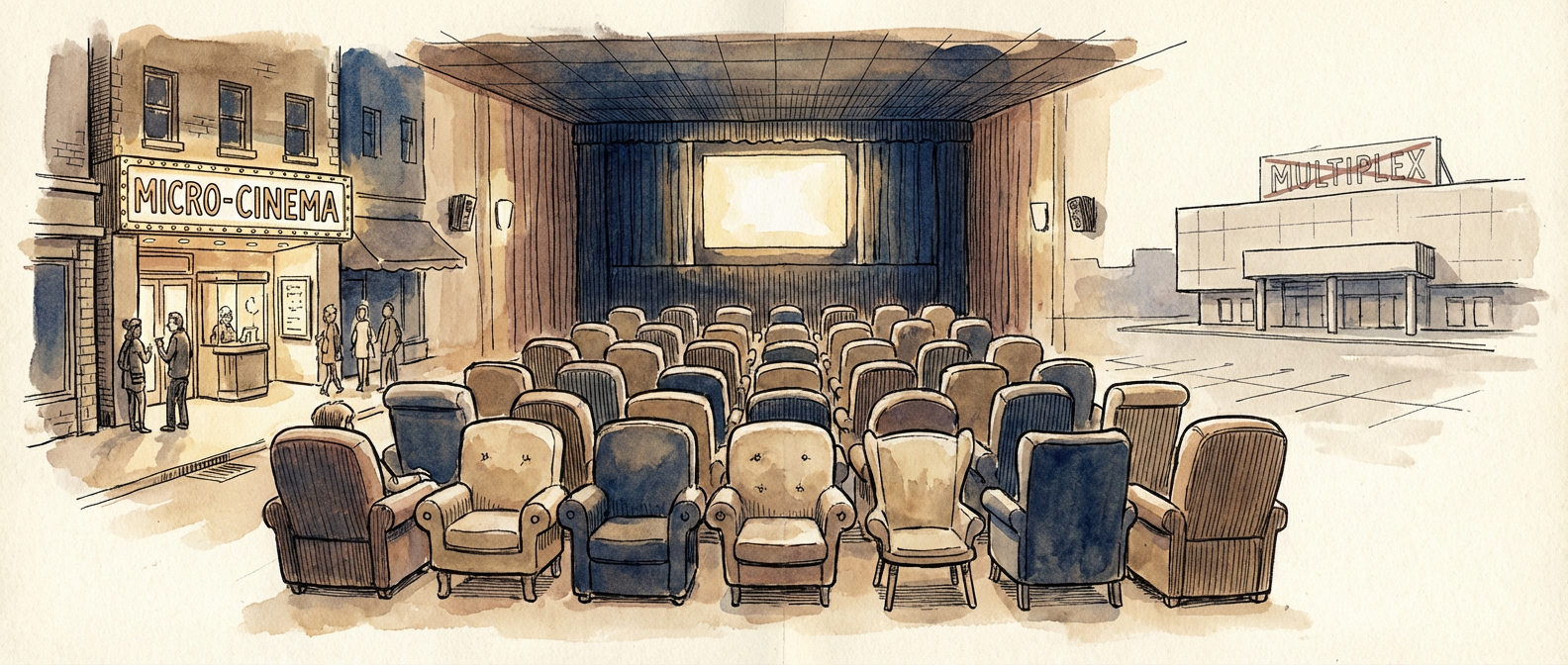
The numbers started telling this story quietly in late 2024, but by now they’re impossible to ignore. The UK’s Cinema Exhibitors’ Association reported something that should have made more headlines: independent venues with fewer than 50 seats saw their revenue climb by 27 percent while multiplexes with over 1,000 seats watched their attendance slip 9 percent. That gap is growing. It’s not cyclical. It’s structural. Something has shifted in how we want to experience cinema, and the massive theater chains built on the economics of the 1990s simply didn’t see it coming.

What a 54-Seat Theater in North London Discovered
Lexi Cinema sits in Kensal Rise, which is the kind of neighborhood most people pass through without really noticing. It’s not trendy in an Instagram way. It’s just authentically itself: residential streets, a strong community, the sort of place where people actually live instead of performing living. The cinema holds 54 people. In Q4 2024, it reported a 94 percent average occupancy rate. That’s not just good. That’s nearly full, night after night.
The national multiplex average occupancy was 61 percent. Let that sit for a moment. A tiny venue in North London is running at 94 percent capacity while the massive chains with IMAX screens and premium recliners are watching three-quarters of their seats stay empty most nights. This isn’t happening in one city or one market. This is happening systematically in cities across the UK and North America. The micro-cinema model works because it fundamentally respects something that multiplexes abandoned somewhere in the 2010s: the idea that cinema is social.
The Curator’s Advantage
When Metrograph announced its January 2025 programming calendar, something unusual happened. Every single screening sold out within 72 hours. The venue has 176 seats across two screens. Every program date. Gone. This is a two-screen cinema in Manhattan operating with the scarcity of a hot restaurant reservation, not the accessibility that cinema promised to be.
Here’s what matters: Metrograph doesn’t show the same films as every other cinema. Someone is actually choosing what plays there. There’s a thesis. There’s a voice. You go to Metrograph to see what Metrograph wants you to see, not just whatever the major distributors demand. That curation isn’t a luxury add-on anymore. For younger audiences especially, it’s the entire value proposition. A 2025 Eventbrite report found that 68 percent of people between 18 and 34 actively prefer intimate, curated experiences over large-scale venues. They’re not trying to see the next Marvel film on the biggest possible screen. They’re trying to be somewhere that means something.
The Metrograph NYC Programming model has spread because it works. The Independent Cinema Office UK Data shows that licensed micro-cinema spaces in US cities over 500,000 people grew from 340 locations in 2022 to over 890 by January 2026. That’s a 162 percent increase in less than four years. These aren’t boutique exceptions. This is becoming the dominant model in major markets.
What We’re Actually Losing
There’s something worth naming here that goes beyond attendance figures. When multiplexes decline, we lose things that don’t show up in any revenue report. The theater where a teenager went on their first date. The place where strangers became neighbors through shared screenings. The casual walk-in possibility of cinema, the chance encounter with a film you weren’t planning to see.
Micro-cinemas curate beautifully, but they also curate for an audience. If you’re not in that audience, you might never know they exist. The old multiplex was a democratic space in its own way, even if that democracy was administered by corporate chains. You could show up without planning ahead. You could just go because a film looked interesting and a theater near you happened to have a 7 PM showing.
The gain in intimate, intentional experiences comes paired with a loss of spontaneity and accessibility. That’s the trade. We’re choosing depth over breadth, curation over casualness, community over convenience. Whether that’s a net positive depends partly on where you stand in the city and partly on what you believe cinema should be.
The Future Is Smaller, But Not For Everyone
The micro-cinema revival is real and measurable and it’s reshaping how we experience films. But it’s worth sitting with the fact that this shift concentrates cinema culture in specific neighborhoods and specific cities. The 890 micro-cinemas operating in major US markets represent genuine community and genuine curation. They also represent a market that’s learned to serve its most engaged audience exquisitely while leaving others behind.
What’s happening right now is that cinema is fragmenting. It’s becoming boutique in the literal sense: expensive, selective, requiring knowledge to access. That’s not necessarily a tragedy. Small theaters make better films possible. They make programming risks possible. They create the kind of spaces where something actually matters. But there’s a melancholy in watching the massive theaters empty, knowing that they represented something important too, even if what they represented was mostly just the democratic principle that cinema should be available to anyone with eight dollars and nearby transportation.
If you’ve noticed one of these micro-cinemas opening near you, or if you’ve been meaning to check one out, now’s the moment when they’re actually thriving. The numbers suggest this isn’t a phase. This is what cinema looks like when it survives by mattering more to fewer people instead of mattering less to everyone. What’s your experience been with independent cinemas? Are they reshaping how you experience film, or does something feel different about them to you?