The Numbers Are Telling a Story Venues Can’t Ignore
Something shifted in nightlife around 2024, and it wasn’t subtle if you knew where to look. According to the Resident Advisor 2025 State of Nightlife Report, early-evening events starting between 6 PM and 9 PM jumped by 28 percent across venues in the U.S., UK, and EU compared to 2023. That’s not a rounding error. That’s venues actively restructuring their calendars to catch a crowd that either doesn’t exist at midnight or doesn’t want to be there when they do.
The shift got real in early 2025 when London’s Fabric, a nightclub institution since 1999, launched something called Fabric Afternoons. Four events. All sold out within 48 hours. A venue that built its reputation on 2 AM techno sets was now moving tickets for 6 PM gatherings. That tells you everything about where the momentum is flowing.
Meet the 44 Percent Who Just Want to Hear Themselves Think
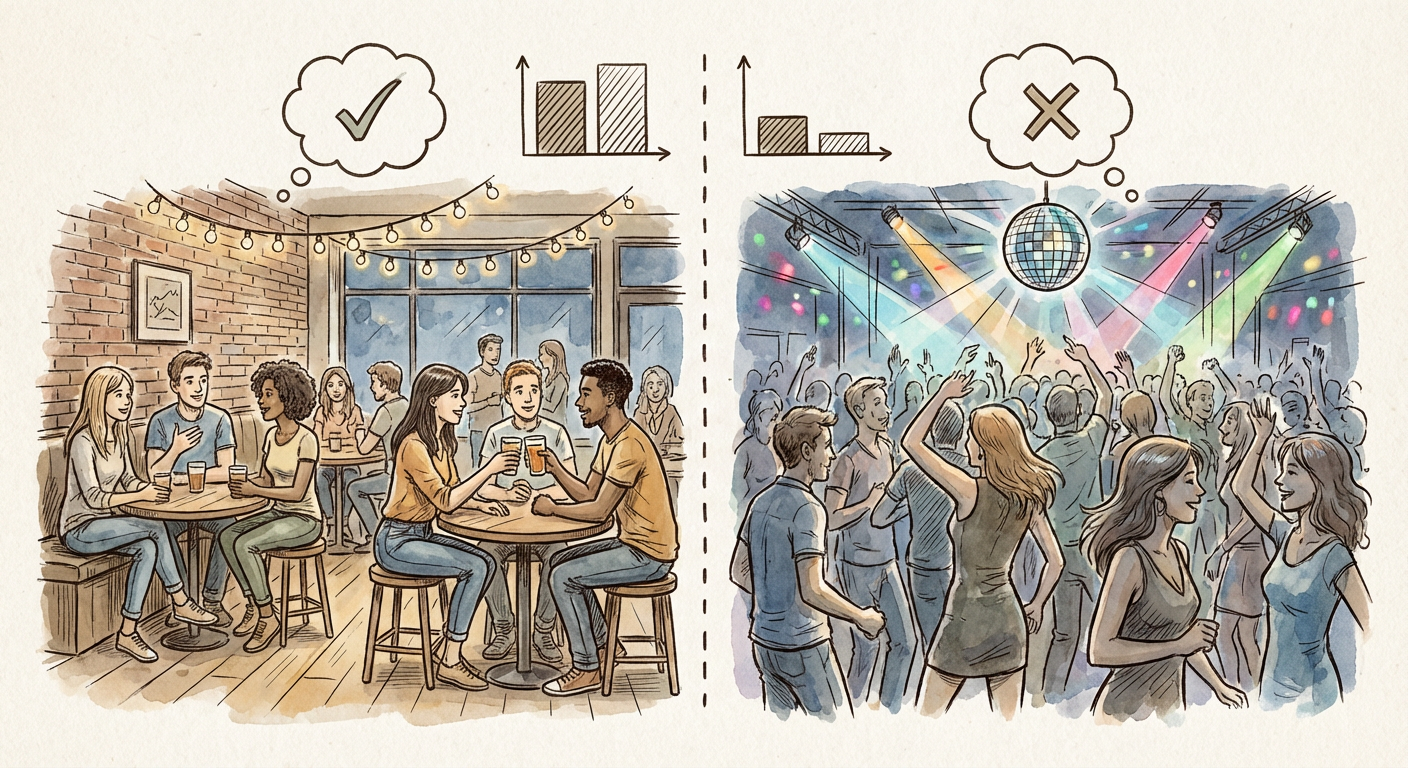
Here’s the revelation that actually explains what’s happening: a YouGov survey commissioned by Diageo in late 2024 found that 44 percent of adults aged 21 to 35 prefer socializing in mid-volume, mid-light environments over traditional loud nightclubs. Nearly half. Not some fringe demographic or generational complaint. The plurality of people in the prime clubbing years are saying they want to be able to have a conversation without shouting directly into someone’s ear canal.
Soft clubbing isn’t anti-clubbing. It’s anti-sensory assault. People still want the social density, the music, the energy of a gathering space with professional sound systems and a decent bar selection. They just want it at a volume where their eardrums aren’t filing for damages. They want lighting that lets them see who they’re actually with. They want to stay until 10 PM instead of midnight and not feel like they left early.
The timing makes sense when you think about where we all are now. Remote work has eroded the line between day and night. Spending all day in Zoom meetings makes a 10 PM start feel punishing. And if you’re going out to actually connect with people, crushing techno at brain-rattling decibels works against that. Soft clubbing is what happens when people vote with their money for what they actually want.
Alcohol Is Losing Its Starring Role
There’s another layer to this, and it’s happening at the bar. No and low alcohol beverage sales at nightlife venues grew 22 percent year-over-year in 2024, according to the IWSR No/Low Alcohol Trends 2024–2025. That’s serious growth for something that used to sit at the back of the menu like a defensive afterthought.
Venues aren’t putting in espresso machines and premium zero-proof spirits because they’re being charitable. They’re doing it because their customers are ordering them. People in their mid-twenties to mid-thirties are showing up to nightlife spaces and choosing not to drink alcohol, or to drink less of it, and they’re not leaving. They’re staying longer. They’re coming back more frequently. The old equation where alcohol consumption equals venue revenue is breaking down.
This tracks with the soft clubbing impulse perfectly. In a mid-volume environment where you can actually hear and see people, you don’t need alcohol as a social lubricant to quite the same degree. Loud, visually overwhelming events where everyone’s already several drinks in create this feedback loop of escalation. Lower the volume and the lighting, and naturally the stakes drop too. A well-made virgin mojito becomes genuinely appealing instead of a consolation prize.
The Math: What Venues Are Actually Making
The revenue question is where this becomes undeniable. Elsewhere, a venue in NYC that’s been part of the conversation for years, announced in January 2026 that its Sunday afternoon programming now accounts for 35 percent of its monthly ticket revenue. In 2023, that same programming was pulling in 12 percent. The venue didn’t lose revenue by adding earlier events. It grew total revenue by expanding its hours and catching people it wasn’t reaching before.
That’s the story right there. Soft clubbing isn’t replacing traditional nightlife. It’s expanding the total addressable market. It’s capturing the audience that went to bars instead, or stayed home, or booked a nice dinner. People who want the ritual and the social element of going out, without the physical punishment or the pressure to stay until 2 AM to justify the trip.
What Happens Next
We’re past the point where soft clubbing is an experiment. Venues with established reputations are betting real money on it. The infrastructure is catching up. Sound engineers are being asked to create mixes that are energizing but conversational. Lighting designers are figuring out how to be atmospheric without being exhausting. Bartenders are developing non-alcoholic cocktail programs with actual craft behind them, not just mixers and apologies.
The old late-night scene isn’t disappearing. That’s still happening at plenty of venues for people who want it. But the nightlife ecosystem now has a much wider envelope. It starts earlier, quieter, more open to people who don’t want to participate in the traditional escalation. The venues paying attention to that shift aren’t struggling. They’re the ones with lines around the block.
If you’ve noticed your favorite spot launching afternoon events or suddenly taking their no-low alcohol selection seriously, you’re not imagining it. They’re reading the same data you’re living through. What do you think is missing from the soft clubbing experience as it’s currently set up? What would make you more likely to try it, or try it again?