Where Stories Brew and Boundaries Dissolve
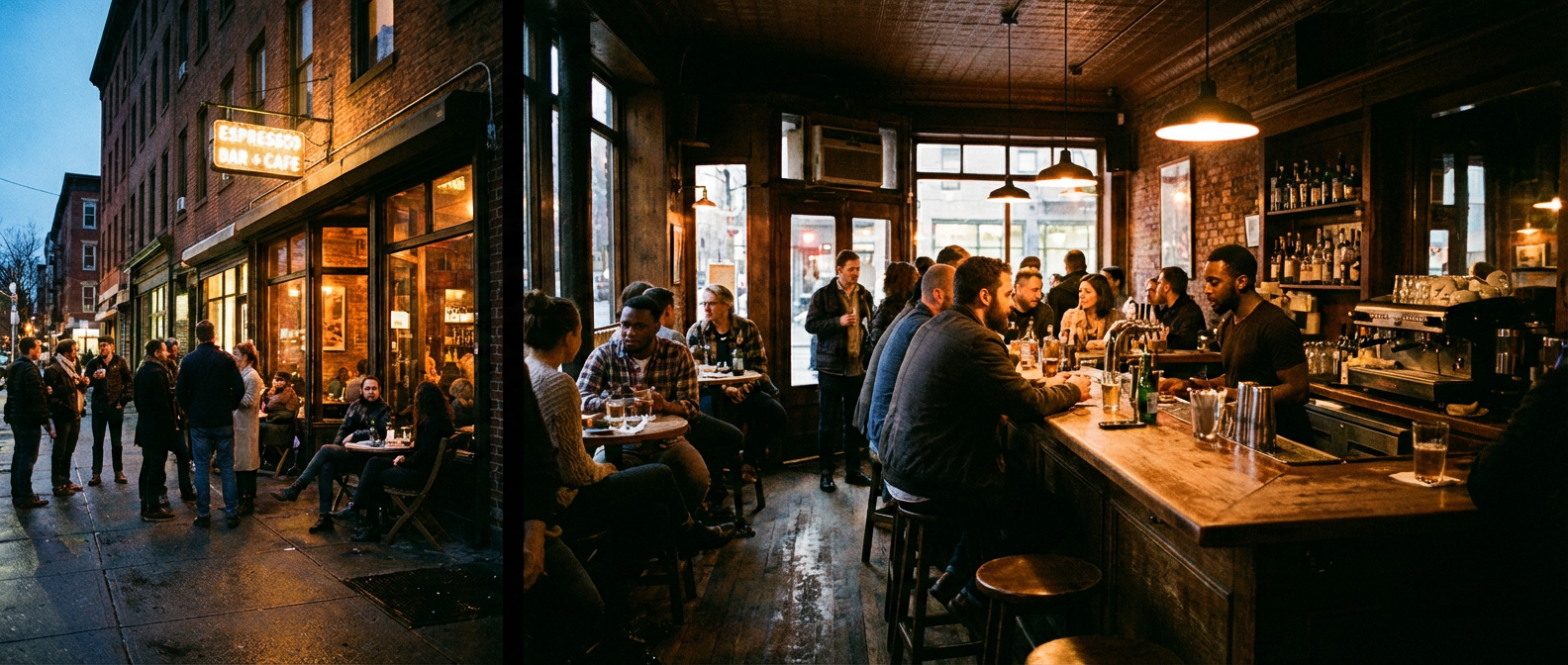
I’m writing this from Marlowe’s, the kind of place where the barista knows your order but the bartender doesn’t judge when you switch from cortado to Old Fashioned at 3 PM on a Tuesday. It’s that magical hour when the afternoon coffee crowd overlaps with the early cocktail seekers, and the conversation at table six has somehow shifted from startup funding to experimental theater without anyone noticing the transition. This is the modern neighborhood bar-café, and it’s quietly changing how we think about community, creativity, and the spaces between work and home.
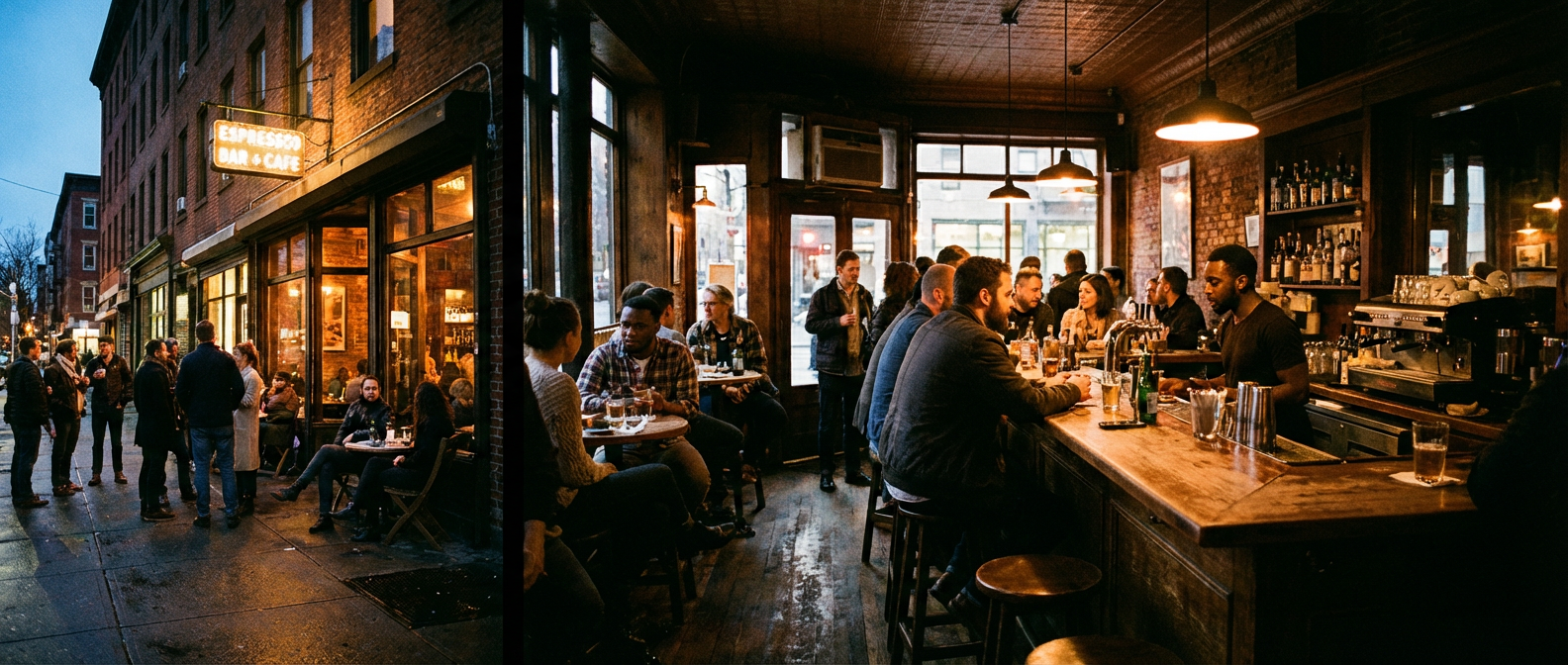
These hybrid venues represent something sociologist Ray Oldenburg called “third places” – those essential social spaces that exist outside our homes and workplaces. But today’s neighborhood bar-cafés have become something more complicated and culturally important than Oldenburg ever imagined. They’re not just places to grab coffee or a drink. They’re spaces where local culture gets made, where emerging artists find their first audiences, and the closest thing many neighborhoods have to a town square.
What makes these spaces special isn’t just their dual identity as both café and bar. It’s how they’ve become laboratories for cultural experimentation, where the boundaries between consumer and creator, stranger and neighbor, work and play get delightfully blurred. Walk into any thriving neighborhood bar-café on any given day, and you’ll witness a dozen small interactions that are building the social fabric of a community, one conversation at a time.
The Architecture of Accidental Encounters
The physical design of these spaces tells a story about intentional community building. Unlike traditional bars with their fortress-like booths or corporate coffee shops with their antisocial laptop-optimized layouts, the best neighborhood bar-cafés create what urban planners call “permeable boundaries.” Counter seating faces both inward and outward, communal tables invite strangers to share space, and sight lines allow for what sociologist Erving Goffman called “civil inattention” – the ability to be aware of others without intruding.
Take the way Sasha designed the bar at Little Ghost, where she positioned the espresso machine and cocktail station so that morning coffee drinkers and evening cocktail enthusiasts literally watch each other’s rituals unfold. “People get curious about what happens here after they leave,” she tells me while pulling a shot that will somehow transform into a perfect cappuccino rosetta. “Coffee people start coming back for drinks, and night people discover our single-origin pour-overs. The space teaches them about each other’s cultures.”
This architectural choreography extends to less obvious details: the height of tables that work equally well for laptops and cocktail conversations, lighting systems that transition from bright morning productivity to warm evening ambiance, and acoustics calibrated so that the morning grinder doesn’t compete with evening jazz. These aren’t accidents. They’re the result of owners who understand that they’re not just serving beverages, they’re creating experiences and making connections possible.
The Ecosystem of Local Talent
Every successful neighborhood bar-café operates as an unofficial artist residency program. The walls rotate local photography and paintings, the playlist features musicians from the neighborhood, and the event calendar reads like a survey course in emerging creative talent. But this isn’t charity or community service. It’s smart business that recognizes how cultural programming drives both foot traffic and emotional investment in a place.
Marcus from Tin Cup tells me about the ecosystem effect: “When we showcase Jen’s photographs, her friends come to the opening. Some of them are musicians, so they start asking about playing here. The musicians bring different crowds, who meet the regular coffee people, and suddenly you have this cross-pollination happening.” It’s cultural programming as community development, where each event creates new connections and deepens existing relationships.
The most interesting part is how these venues have democratized cultural gatekeeping. Instead of traditional galleries or music venues with their intimidating hierarchies and exclusive networks, neighborhood bar-cafés offer accessible platforms for emerging artists. The painter whose work hangs behind the espresso machine might sell more pieces in a month than they would in a formal gallery setting, simply because people see the work as part of their daily routine rather than as something separate and precious.
This accessibility works both ways. Regular customers become informal curators and collectors, developing relationships with artists they might never have encountered otherwise. I’ve watched morning regulars become enthusiastic supporters of local bands they discovered during evening shows, creating a cultural feedback loop that benefits everyone involved.
The Politics of Place and Belonging
But let’s be honest about the complexities here. The neighborhood bar-café, for all its community-building potential, also participates in the broader dynamics of urban change and gentrification. These spaces often become symbols of neighborhood transformation, attracting new residents while potentially displacing long-term community members who can’t afford $5 lattes or $14 craft cocktails.
The most thoughtful operators recognize this tension and work actively to address it. Some offer sliding scale pricing during certain hours, others prioritize hiring from the immediate neighborhood, and many create programming that specifically celebrates and includes existing community culture rather than replacing it. Rosa at Constellation Coffee makes sure to stock Mexican pastries from the panadería next door and keeps her prices accessible to the families who’ve lived in the neighborhood for decades.
The question of belonging in these spaces is ongoing and complex. Who gets to feel comfortable? Whose cultural expressions get validated? How do you balance the desire to create a welcoming space for newcomers while honoring the community that was already there? The best neighborhood bar-cafés treat these questions as ongoing conversations rather than problems to be solved once and forgotten.
Reading the Room, Building the Future
What emerges from spending time in these spaces is a sense of their important role in urban social life. They’re not just businesses, they’re infrastructure for human connection in an increasingly digital and isolated world. They provide what urban theorist Jane Jacobs called “eyes on the street” – informal social surveillance that makes neighborhoods safer and more connected. They offer economic opportunities for local artists and musicians, cultural education for residents, and social learning for people navigating an increasingly diverse urban environment.
The future of neighborhood bar-café culture will likely depend on how well these spaces continue to evolve and adapt to their communities’ changing needs. The most successful ones already function as informal community centers, offering everything from casual job networking to impromptu childcare cooperation among regular customers. They’re places where neighbors meet neighbors, where cultural boundaries become conversations rather than divisions, and where the simple act of sharing space can lead to unexpected collaborations and friendships.
Next time you’re in one of these spaces, take a moment to notice the complex social choreography happening around you. Watch how the regulars interact with newcomers, how conversations spark across tables, how the space itself seems to make human connection easier. These observations aren’t just interesting. They’re essential data points for understanding how community actually gets built in contemporary urban life, one conversation and one shared experience at a time.