Urban culture and city identity in post-pandemic cities — An Honest Cultural

Here is the thing I keep coming back to on this. The topic of urban culture and city identity in post-pandemic cities rewards more careful attention than the typical coverage provides, and the reason is not complicated once you know where to look.

What I find most interesting, and I think you will too, is cultural institution closures reshaping urban arts scenes in mid-size cities. The curious read of the situation is also the more accurate one once you examine what the evidence actually shows.

The Journalism: Setting the Terms

Remote work permanently reducing office occupancy in downtown cores isn’t just a data point in the story of urban culture and city identity. It’s the structural condition that makes everything else in this analysis legible. Context like this doesn’t age quickly. The conditions that produced it have been building for years, and the convergence makes the current moment distinct from previous moments that looked similar from a distance.

Cultural institution closures are reshaping urban arts scenes in mid-size cities. Meanwhile, gentrification debates intensify as creative class displaces working communities. When you look at both together, a pattern emerges that CityLab urban culture has been covering from the inside: the conditions are more durable than they first appear, and the implications extend further than the immediate headline suggests.

To understand why this matters, it helps to look at what was true three years ago versus what is true now. The delta isn’t simply quantitative, it’s qualitative. The participants, the infrastructure, and the incentive structures have all shifted in ways that compound rather than cancel out. That compounding is the most important element to track.

What makes this moment worth examining carefully isn’t the novelty but the confirmation. The underlying dynamics have been visible for some time. What’s new is that they’ve reached a threshold where ignoring them requires active effort rather than simple inattention. That threshold crossing is the event, not the underlying movement that produced it.

And night-time economy policies emerging as urban planning focus is part of that same picture. These elements don’t exist in separate silos. They’re reinforcing conditions in the same structural shift.

The Subculture Map: The Analysis

Night-time economy policies emerging as urban planning focus is where the analysis gets more specific. The surface reading is accessible and not wrong, but it misses the mechanism. And the mechanism is where the practical insight lives. What I find most interesting, and I think you will too, is how this connects to third places like coffee shops, libraries, and parks gaining renewed policy attention. Understanding it changes what you do with the information.

Consider what renewed attention to third places represents in context. It’s not a correlation that happened to appear. It’s a downstream consequence of structural factors that have been compounding. Previous readings of similar situations failed because they treated the symptom as the cause. The structural account is less satisfying as a headline but more useful as an analytical tool.

The comparison to prior cycles is instructive precisely because of where it breaks down. Superficially similar conditions resolved differently in previous iterations because the substrate was different. Local media deserts leaving 200 US counties with no news coverage represents a substrate change, the kind that alters the elasticity of the system rather than just its current value. Recognizing that distinction separates analysis from pattern-matching.

The skeptical counterargument deserves honest engagement: prior moments with similar surface characteristics didn’t produce the outcomes that seemed logical at the time. That history is real. What’s different now is local media deserts leaving 200 US counties with no news coverage, which isn’t a minor variable. It’s the infrastructure condition that previous cycles lacked. Infrastructure changes tend to be persistent in ways that sentiment-driven changes are not. Curbed urban design is one source tracking this dimension with the rigor it requires.

There’s also a distributional question that often goes unaddressed in coverage of post-pandemic urban culture: who captures the value created by these shifts, and who absorbs the disruption costs? The aggregate picture can be positive while the distribution is uneven in ways that matter enormously to specific participants. Keeping that distributional lens in view is part of reading the situation clearly rather than simply optimistically.

Implications: What This Means If You Care About Music subcultures

The implications extend beyond the immediate context. Remote work permanently reducing office occupancy in downtown cores combined with the structural conditions described above creates a situation where adjacent fields, decisions, and communities get affected in ways that aren’t always visible from inside the primary story. The second-order effects are frequently more important than the first-order ones, and they’re where careful attention pays the highest returns.

Here’s where this perspective departs from the mainstream coverage: gentrification debates intensifying as creative class displaces working communities is a leading indicator rather than a lagging one. The people positioned to respond to what this signals, rather than to what it confirms, are the ones who will be less surprised by what follows.

The practical response depends heavily on your position relative to the dynamics at play. For those closest to the core of urban culture shifts, the implications are immediate and operational. For those at greater distance, the implications are strategic, a matter of understanding which adjacent pressures are building and which assumed stabilities are more fragile than they appear.

The practical question isn’t whether to engage with these dynamics but how. The answer depends on context, on what role you occupy and what your actual decision horizon is. But the first step is the same regardless: accurate understanding of what’s actually happening rather than what the most available narrative says is happening.

A few concrete observations are worth separating out from the broader analysis. First: cultural institution closures reshaping urban arts scenes in mid-size cities isn’t a temporary condition, it’s a new baseline. Second: third places gaining renewed policy attention suggests that the adjustment period isn’t over. Third, and most important: the organizations and individuals who are treating the current moment as a new steady state rather than a transition are making a categorization error that will be costly to unwind later.

The Case Against: What the Critics Get Right

Intellectual honesty requires acknowledging the strongest counterarguments, not just the weakest ones. The case against the optimistic reading isn’t trivial. There are structural vulnerabilities in the current picture that deserve direct engagement rather than dismissal.

The most serious objection is the one about sustainability. Gentrification debates intensifying can be read not as a foundation but as a ceiling, a point beyond which growth becomes self-limiting because of the very dynamics that produced it. If the current state has already incorporated most of the available supply of early-adopting participants, the remaining growth curve may be structurally shallower than the recent trajectory implies.

There’s also the policy and regulatory dimension. Remote work permanently reducing office occupancy describes a condition in a relatively permissive environment. Regulatory responses to the scale implied by these numbers aren’t inevitable, but they’re not implausible either. The organizations that are planning as though the current regulatory environment is permanent are making an assumption that the history of fast-growing sectors doesn’t support.

The rebuttal to these concerns isn’t that they’re wrong, it’s that they’re already partially priced into the current state of the field. Local media deserts leaving 200 US counties with no news coverage reflects an environment where participants are already adapting to constraints rather than operating in an unconstrained space. The adjustment capacity of the ecosystem is higher than a purely top-down view of the risks suggests.

Looking Forward

The trajectory here is clearer than the pace. Making predictions about when specific thresholds will be crossed is genuinely difficult, and anyone claiming precision about timelines should be treated with skepticism. But the direction toward continued remote work and continued development of the conditions described above is supported by the evidence in a way that isn’t contingent on a single variable going right.

Local media deserts leaving 200 US counties with no news coverage is the variable to watch as the leading indicator. Historical patterns suggest it moves first, with broader metrics following with some lag. This doesn’t make the outcome certain, but it makes it legible. And legibility is the precondition for good decisions.

Three questions are worth holding as the story develops. First: are the structural conditions that enabled the current state durable, or are they cyclical? Second: who’s positioned to benefit from the next phase, and does that differ materially from who benefited in the current phase? Third: what would a clean falsification of the optimistic thesis look like, and is there any evidence of that signal emerging? These questions don’t need answers today, but having asked them changes what you notice in the months ahead.

That’s my read. I want to hear yours. The current moment in urban culture and city identity is one where the people who have built an accurate model of the underlying dynamics are better positioned than the people who are relying on the surface story. Building that model isn’t a quick task, but it’s a tractable one, and this analysis is intended as one input into it.

If you’re inside this scene, what did I get wrong or oversimplify?

Shaking Up the Creative Industry: AI’s Master Plan

Hey, tech fam! Gather ’round because I’ve got something super exciting to talk about today. It’s one of those topics that makes you feel like you’re living in a sci-fi movie, right here and now. Yep, I’m talking about Artificial Intelligence in the creative arts. If you’re like me—someone who loves both gadgets and galleries—this is where the worlds collide in the most awesome way possible. Let me take you on a tour of this mind-blowing frontier.

The Dawn of AI in Creative Arts

Okay, so we all know AI has been flexing its muscles in a gazillion fields—medicine, logistics, finance—you name it. But what about the creative realm? Once the exclusive playground of humans, creativity is now getting a high-tech makeover. From sketching art pieces to composing symphonies, AI is jumping into the creative pool head-first. Talk about a plot twist, right?

And it’s not just about robots doing our jobs (cue the Terminator memes). AI in creative arts offers a partnership between technology and human imagination. This mashup is like a dynamic duo that brings out the best in both worlds.

AI-Driven Visual Arts: When Algorithms Pick Up the Paintbrush

Let’s start with visual arts. Not too long ago, I was checking out some digital galleries and stumbled upon works credited to names like DeepArt and ArtBreeder. Yeah, I had to do a double-take, too. These aren’t your typical painters; they’re AI algorithms!

Take, for example, the algorithm made by Google called DeepDream. It creates these psychedelic, surreal images that look as if Salvador Dalí had a love child with a motherboard. Then there’s DALL-E, another OpenAI creation, a neural network trained to generate images from textual descriptions. “Elephant as a barista?” Boom, you’ve got art. It’s a creativity catalyst and a super-fast one at that.

The Human Touch

Some of you might be thinking this could mean curtains for the human artist, right? Not so fast! While algorithms provide new tools, it’s the human artist who ultimately shapes the process and brings emotional depth. AI is more like an artistic partner that expands our palettes, still leaving plenty of room for our unique, human touch.

Harmonizing Music: AI, the New Co-Composer

Let’s pivot to another exciting industry where AI is making waves—music. You’ll recall music packed with heart and soul, crafted by legends like Beethoven, or brought into pop culture by The Beatles. Yet today, even these masterpieces have a mechanical cousin.

Tools like Jukedeck and AIVA (Artificial Intelligence Virtual Artist) let you compose a music track at the touch of a button. AIVA, for example, has even composed a few symphonies that have been performed by live orchestras! With its ability to analyze vast amounts of existing music, AI has become the new co-composer. But like its counterparts in the visual arts, it doesn’t replace composers; instead, it acts as a resource for inspiration.

Collaboration Over Competition

Here’s the twist: AI doesn’t drain the “human” out of music. Instead, it adds another layer of depth and versatility to it. Composer Taryn Southern used AI to release an entire album, called “I AM AI,” proving that algorithms and artists make a powerful duo. Think of AI as a collaborator rather than competition. Two heads (even if one of them’s digitally coded) are better than one!

Storytelling and Screens: AI’s Role in Film and Literature

It gets even better. Ever imagine algorithms weaving stories or directing films? Well, they’re on it! From penning short stories to suggesting movie plots, AI has been making its grand debut in Hollywood and beyond.

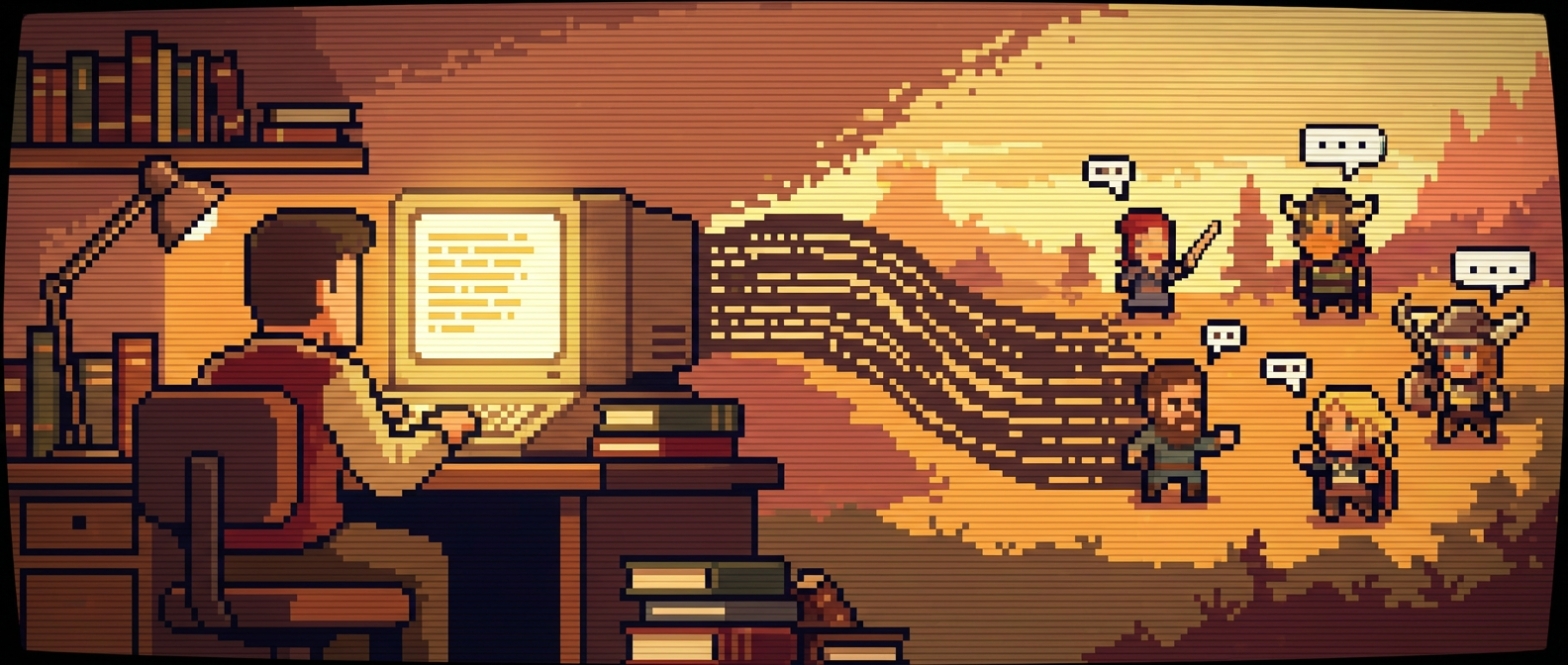
AI screenwriters like ScriptBook analyze scripts for potential box office success. You can’t forget AI Dungeon, a game that uses GPT-3 to generate limitless, dynamic storylines. Imagine starting with a knight and dragon quest that morphs into a sci-fi saga at the snap of a finger. Pure magic!

Limits and Lessons

Truth is, while AI’s pretty nifty at presenting the “what” and “how,” it’s still learning the “why”—the human nuances and motivations that give stories life. It’s in this gap where the real magic of human creativity still reigns supreme. Also, AI in storytelling can introduce us to new genres we hadn’t even considered. Hybrid fiction, anyone?

Challenges Ahead

Before we all get too star-struck by AI’s creative prowess, it’s worth mentioning some bumps in the road. Ethical and copyright issues are hot topics around AI-generated works. Who owns a masterpiece created by an algorithm? And let’s not forget about the debate on job displacement in creative fields, it’s real and needs careful navigation.

What’s Next: A Creative Renaissance?

As we look ahead, let’s speculate a bit (because speculating is just so much fun, right?). With AI becoming increasingly sophisticated, we might be on the brink of a creative renaissance. This one rooted as much in code as it is in canvas and chords. Picture a world where an artist and an algorithm co-host a gallery exhibition or a film festival curated by humans and machines alike. Feels like sci-fi, but it might just be tomorrow’s reality.

Conclusion: Forward into Creative Utopia!

So, here we are, standing at this incredible crossroads where tech and creativity shake hands. The potential is sky-high, scary, and stupendously thrilling all at once. Whether you’re a tech enthusiast, an artist, or just someone who loves a good story, there’s something here for everyone. As AI continues its dance in the creative sphere, it’s up to us to keep learning, adapting, and imagining what’s possible. Who knows? Tomorrow, you might just be brainstorming your next big project with your very own AI muse. Now, wouldn’t that be something?

Well, my fellow technophiles, that’s all for today. Go forth and create, with perhaps a little help from your digital ally. Catch you next time!

Unlocking Creativity: AI’s Brushstroke on the Canvas of Artistic Expression

Hey, tech enthusiasts! Gather around, because today we’re doing a deep dive into a topic that’s like electricity tingling in the veins of the art world. Yep, we’re talking about Artificial Intelligence in creative arts. If you’re imagining robots painting Picassos, you’ve got the right idea, but it’s even more fascinating than you think. Let’s unpack this.

The New Picassos: AI-Generated Art

Artificial Intelligence is changing creativity in ways even Da Vinci, that legendary polymath, would struggle to wrap his head around. AI-based programs are making headlines for their artistic skills, creating whole paintings, music, and even screenplays. Picture neural networks picking up a virtual brush and creating masterful art pieces that could hang in the MOCA!

The team at OpenAI released a model that’s truly mind-bending: DALL-E, a neural network that creates images from text descriptions. You tell it “an impressionist painting of a llama doing the cha-cha,” and boom, you’ve got some exquisite, albeit whimsical, high-art llama on your screen. What a time to be alive!

Artists and Algorithms: Collaboration or Competition?

Now, before we paint AI as a rival genius in the art world, let’s chat about what it’s actually doing out there. Traditional artists initially approached AI with a mixture of intrigue and worry. Can algorithms really do what human creativity does? Can they feel the same “happy accidents” that led Bob Ross to greatness?

In practice, AI expands the toolkit available to artists and opens up new possibilities for art forms. Just peek into the creative studios where artists work with coders to create ‘AI-driven generative art’. These collaborations form an entirely new genre. AI isn’t robbing creatives of their jobs; it’s putting a shiny new wrench in their toolkits. It’s a co-creator, and yes, learning to work alongside AI might need a learning curve like mastering acrylics.

Algorithms Finding Their Feet in Film and Music

AI’s art partnership isn’t just limited to canvas. We’ve got machine learning churning out symphonies and film scripts! Now, before you book your ticket for an AI-directed blockbuster or kick back to an epic AI-composed opera, understand that this is a mixed bag.

Take the movie “Sunspring,” a short science fiction film entirely scripted by AI. While its plot is undeniably funky, it showed one thing: AI can string together something human-readable and, dare I say, endearing. In music, AI tools like Google’s Magenta offer improv prompts for musicians, a digital band member that never complains about practice times.

The Story Arc of AI in Arts: Challenges & Controversies

If there were credits for this AI revolution, controversy would have a starring role. There are legitimate concerns about originality. If AI trained on existing artworks generates new pieces, is that art infringing on copyrights, or is it derivative, like how artists from every era drew inspiration from others?

And another plot twist: digital art pirates. The Internet has its fair share of unscrupulous operators, and the prospect of AI churning out thousands of art pieces ripe for making a fast buck has art purists on edge. It’s not just about the creatives, but how we, as consumers, value authenticity. We have some philosophical debates brewing, friends.

Peering Into the Crystal Ball: Future Implications

Will galleries feature new wings dedicated to AI masterpieces, or will every coffee shop have a bot-generated mural? That’s speculation on my part. Yet, one thing seems clear: AI will continue to change the art world. Hybrid art forms are emerging, where human intuition and machine learning come together to create worlds never imagined before.

Tools that make art more accessible, offering creative capabilities to those who have never held a brush or belted a note, will expand who gets to be a creator. Doors, long closed by intimidating gatekeeping and expensive tools, will swing wide open.

The Soul of the Artist: Human Creativity in the Age of Intelligent Machines

Amid all this excitement, let’s remember one thing: art has always been about soul. The emotional, sometimes inexplicable connection between the creator and the observer leaves its mark on any creation. Here’s where humanity maintains its edge over AI. While machines can generate, remix, iterate, and extrapolate, they don’t feel the way we do.

Sure, they can paint a beautiful sunset, but they don’t understand the melancholy of its descent. That’s our job, the uniqueness of our experiences and emotions. Those raw, uncodeable feelings, that’s the realm of human creativity.

Conclusion

So there you have it. AI isn’t invading the creative arts; it’s carefully adding its own brushstrokes, supplementing and sometimes steering our creative potential in unimaginable directions. Whether artists choose to dance with or sidestep these algorithms, it’s clear that AI and creativity will perform an intriguing duet well into our future.

Here’s to the evolution of artistry in this digital age. Grab a paintbrush or a keyboard, and maybe even a bit of code, and let’s get creating!

Riding the Quantum Waves: The Coming Reality of Quantum Computing

Hey, fellow tech enthusiasts! Today, I’m bubbling over with excitement about one of the most mind-bending frontiers of technology that’s about to shake up our digital world—quantum computing. I know, I know—it sounds like something straight out of a sci-fi movie. But trust me, this stuff is way too real and exciting to ignore.

What is Quantum Computing? The Basics

Before we get to the good stuff, let’s clear the air: what exactly is quantum computing? Unlike classical computers, which use bits as the smallest unit of data (0s and 1s), quantum computers work with qubits. Here’s where it gets weird—these qubits can exist in superpositions of states, meaning they can be both 0 and 1 at the same time. If your brain’s already doing somersaults, imagine those twirls at hyperspeed. That’s quantum power for you. Quantum computing isn’t just about more horsepower under the hood. It’s a completely different type of engine.

Recent Breakthroughs: Quantum Leaps Forward

Now for the good stuff. Tech giants like IBM, Google, and a bunch of startups are racing to crack the quantum code. Google’s claim of achieving “quantum supremacy” back in 2019 was like dropping a mic in the tech world. Their quantum processor, Sycamore, supposedly performed a task in 200 seconds that would take a classical supercomputer 10,000 years.

But wait, there’s more! IBM has been making serious progress too, with their plans to unveil a 1,000-qubit machine by the end of 2023. To put that in perspective, that’s like moving from a matchstick to a flamethrower in the computing world.

Applications that’ll Warp Your Mind

Cryptography: Breaking (and Making) Codes

I can already hear security experts breaking into a cold sweat. Quantum computers could make today’s encryption laughably obsolete. Techniques like RSA encryption, which protect our online communications, might be cracked in seconds. Don’t freak out just yet! The flip side is that quantum mechanics also brings post-quantum cryptography, offering security solutions way beyond what we have now. Researchers are also working on quantum key distribution (QKD) to create unhackable communications. It’s a digital arms race out there, folks.

Medicine: Designing Drugs in Record Time

Now, let’s talk about health tech. Finding new drugs is often like searching for a needle in a haystack. You have millions of molecular configurations to consider, and that takes years. Quantum computing can speed this up dramatically, letting pharmaceutical companies simulate and test drug interactions almost instantly. Imagine tackling pandemics in weeks instead of years. Pretty wild, right?

Artificial Intelligence: Getting Seriously Smart

If I weren’t already excited about AI, quantum computing is the rocket fuel that could send artificial intelligence into orbit. Quantum algorithms excel at crunching massive datasets, which means faster, more accurate machine learning. AIs could soon be solving problems faster than you can hit Ctrl+C.

Challenges: Not All Smooth Sailing

But hey, let’s not break out the champagne just yet. There are some serious hurdles here. Quantum computing is finicky as hell. It’s sensitive to the tiniest environmental changes, so keeping qubits stable for computation is a massive challenge. Plus, the cost of building and maintaining these systems is absolutely insane. We’re talking R&D budgets that would make NASA nervous.

Future Outlook: When Can I Get My Hands on a Quantum Computer?

So, when can we expect to be running quantum calculations on our personal laptops? The reality check: widespread commercial availability is still years, maybe decades away. But there’s hope. Quantum-as-a-Service models are popping up, like IBM’s cloud offerings, which means hobbyists and researchers might get limited access to these quantum beasts through the cloud. It’s still early days, but getting familiar with quantum concepts now will help you ride this wave when it really hits.

Wrapping Up

So there you have it—quantum computing is this fascinating mix of incredible potential and real challenges. From breaking encryption to discovering new drugs, the applications are enough to keep any tech lover’s mind racing. We’re standing at what might be the edge of a computing revolution. It’s worth keeping one eye on the quantum horizon while staying grounded in the realities of where the technology actually stands today.

Got thoughts or want to dive deeper into the quantum rabbit hole? Drop a comment or join the conversation. Let’s geek out together as we figure out this quantum puzzle. Until next time, keep exploring!

The Evolving Landscape of Robotics: Stepping Into the Future with Automations

Introduction

Hey tech enthusiasts! Today, I want to talk about something that’s been close to my heart ever since I saw my first sci-fi movie as a kid. That’s right, we’re diving into the world of robotics, a field moving so fast it feels like we’re living in the future. And I’m not just talking about your average Roomba. I’m talking about intelligent machines that are about to change the world we live in. From personal assistants to healthcare aides, robotics is making those techno-utopian dreams come to life.

If you’re not paying attention to this tech revolution, you’re missing out. Let’s explore how these advances are setting us up for a future that seems straight out of a sci-fi novel, but is actually just around the corner.

Robots with a Purpose: Beyond Manufacturing Floors

Robots aren’t stuck on factory assembly lines anymore. They’re getting smarter, more approachable, and sliding quietly into various parts of our lives. AI and machine learning improvements have given robots the ability to not only execute tasks but also learn from them.

Personal Robotics: Your Future Companions

Personal robotics is where we’re seeing some pretty amazing innovations. Companies in the United States, Germany, and Japan are creating robots designed to help with daily chores. These machines can do everything from fetching groceries to offering conversation when you’re feeling lonely. They can even look after the elderly, providing care while offering companionship.

One startup, Intuition Robotics in Israel, is making waves with its product, ElliQ. Targeted primarily at the elderly, ElliQ offers more than just basic assistance. It can stimulate enriching interactions to fight loneliness and boost mental health. No wonder it’s caught the attention of Silicon Valley investors trying to get a piece of this market.

Healthcare: Great Assistants in Scrubs

In healthcare, robots are becoming essential allies. Over the past couple of years, the shortages in healthcare workers have become painfully obvious. So what does the future of healthcare look like with robots in the picture? We might be heading toward a world where routine check-ups and minor surgical procedures rely heavily on automation, allowing for better precision, consistency, and accessibility.

Take the da Vinci Surgical System, for example. It’s a minimally invasive robot that surgeons control to perform everything from heart valve repairs to organ transplants. While we’re not looking at complete automation of surgical procedures anytime soon, these robots eliminate risks of human error like shaky hands or surgeon fatigue, which improves success rates.

Cognitive Robotics: Machines with Minds

Another interesting branch of robotics is cognitive robotics, the field focused on giving robots advanced decision-making abilities similar to humans. Cognitive robotics aims to blur the line between machine learning and human cognition, basically moving beyond robotic automation toward robotic autonomy.

Semantic Understanding: Robots Get Contextual

Semantic understanding is where cognitive robotics really shines. When robots can understand the context of a situation, they become much more efficient and useful. In tech terms, this means better Natural Language Processing (NLP) and object recognition skills.

Imagine a robot in a customer’s home that doesn’t just identify a “chair” but understands that a chair is something you sit on. This kind of intuitive knowledge often makes or breaks user interactions with robots. Semantic robots could completely change the game for virtual assistants that we want to not just obey commands but grasp the nuances of our needs.

Collaborative Robots

Collaborative Robots, or “cobots,” are likely going to transform various industries. They can work alongside humans, meaning they are designed to safely interact in human environments. Unlike their bigger cousins on manufacturing lines, cobots are light, flexible, and far easier to work with. Their adaptability to human tasks allows them to fill gaps in human labor while ensuring safety and efficiency.

What I find most interesting is their use in agriculture, where they help pick fruits, analyze soil samples, and even monitor crop health. Farming is back-breaking work, and integrating cobots gives us a real taste of that techno-utopian ideal where machines minimize human labor.

The Pitfalls: Ethical Considerations and Job Displacement

While all this sounds incredibly exciting, let’s add a dose of reality to our enthusiasm. Like any disruptive technology, the rise of robotics has its share of concerns.

Ethical Considerations

How do we incorporate robots ethically? Who is responsible if a robot makes an autonomous decision that results in harm? These are questions societies worldwide are wrestling with. As robots become more autonomous and capable of making decisions, we need to build in fail-safes to ensure ethical outcomes.

Job Displacement

And then there’s the elephant in the room: job displacement. As robots become better at performing tasks faster and more efficiently than us, what happens to human workers? While robots are meant to assist, not replace humans, the reality is that automation will definitely affect employment.

That said, many experts argue that robotics will create entirely new opportunities, much like how ATMs haven’t replaced bank staff but instead have changed the nature of banking services. It’s a promising future, but one that requires a thoughtful transition.

Conclusion

So there it is, our fascinating journey into the world of robotics. There’s genuine excitement as we stand on the edge of what could be a truly transformative era. Robotics isn’t just changing, it’s completely revolutionizing how we think about automation and interaction.

For all the progress we’ve made, it’s equally important that we consider the ethical implications and societal impacts of these advances. It’s up to us to ensure that as we embrace this technology-driven future, we do so responsibly and thoughtfully. If handled correctly, the future holds an exciting partnership between human intelligence and robotic capability, providing opportunities we could only dream of before.

The next time you see a robot cleaning a floor or assisting in surgery, know that you’re witnessing the beginning of a world we could only once imagine. So here’s to more thrilling, constantly advancing innovations in robotics. The future is quite possibly already here, and it’s pretty incredible.

Stay curious, my tech-loving friends!

Exploring Future Possibilities: The Quantum Computing Revolution

Introduction: A Paradigm Shift in Computing

Hey tech enthusiasts! Let’s talk about quantum computing today. It’s a topic that’s been gaining serious momentum, and honestly, it might completely change how we think about computation and solve problems that our current computers can’t even touch.

Quantum computing is one of those technologies that could genuinely flip everything on its head. I’m talking about computations that would take our best supercomputers millions of years, potentially finished in minutes. We’re looking at a computing revolution that makes Moore’s Law seem quaint by comparison.

This isn’t some distant sci-fi fantasy anymore. It’s actively changing what we think is possible, opening doors in cryptography, drug discovery, cybersecurity, and tons of other fields. So let’s dig into what makes quantum computing so special and why everyone from IBM to tiny startups is throwing massive resources at it.

The Fundamentals of Quantum Computing

Alright, let’s break down the basics. Quantum computing is built on quantum mechanics, which is admittedly weird physics that operates at the atomic level. The key difference is quantum bits, or qubits. While regular computer bits can only be 0 or 1, qubits can be both 0 and 1 at the same time through something called superposition.

But here’s where it gets really wild. Qubits can also be entangled, creating connections that let them influence each other instantly, even across vast distances. This gives quantum computers a type of parallel processing power that’s just impossible with traditional computers.

Superposition and Entanglement: The Dynamic Duo

Superposition lets a quantum computer test multiple solutions simultaneously instead of going through them one by one like classical computers do. Add entanglement to the mix, and you get multiple qubits working together in ways that create exponential increases in computing power.

This combination makes quantum computers incredibly powerful for specific types of problems. They can explore every possible solution at once, which is huge for optimization challenges, complex simulations, and breaking encryption codes.

The Quantum Computing Landscape in 2023

So where do things stand in 2023? We’re seeing real progress beyond just lab experiments. Tech giants like IBM, Google, and Intel are racing against startups like Rigetti Computing and D-Wave to build quantum systems that can actually beat classical supercomputers at useful tasks.

Tech Titans and Rising Startups: The Quantum Quest

IBM dropped its 127-qubit Eagle quantum processor, which set a new record in the field. Google’s Quantum AI team claimed they achieved quantum supremacy for certain specific calculations. Intel’s Horse Ridge II cryogenic control system is also making progress on one of the biggest challenges: keeping these systems stable and scalable.

The startup scene is equally interesting. Rigetti Computing is working with companies that want quantum advantages right now, while D-Wave’s quantum annealing approach is already solving real optimization problems for businesses.

Bridging Theory and Application

What’s really exciting is watching quantum computing move from “cool in theory” to “actually useful.” We’re starting to see quantum computers tackle problems that were previously impossible or impractical.

Drug companies are using quantum simulations to understand molecular behavior for new medications. Financial firms are running complex risk models that would choke traditional computers. Even logistics companies are using quantum algorithms to optimize delivery routes and cut costs.

Challenges Ahead: Navigating the Quantum Jungle

But let’s be real. Quantum computing isn’t ready for prime time yet. We’re dealing with some serious technical hurdles, especially around error rates, system stability, and what researchers call decoherence.

Error Rates and Quantum Decoherence: The Thorny Path

Qubits are incredibly finicky. They’re sensitive to temperature, electromagnetic fields, cosmic rays, you name it. When they get disturbed, they lose their quantum properties through decoherence, which basically means your calculation gets corrupted. Current error correction methods help, but they’re not nearly good enough yet.

Scaling up is another massive challenge. Building a quantum computer with thousands of stable, entangled qubits requires solving not just technical problems but economic ones too. These systems are incredibly expensive and complex to maintain.

The Quantum Future: Envisioning Utopian Shifts

Even with these challenges, I’m genuinely excited about where this technology is heading. The researchers and engineers working on this stuff are making progress faster than many people expected, and the potential applications are mind-blowing.

A Utopian Vision of Quantum Impact

Picture quantum algorithms that make current encryption methods obsolete, forcing us to completely rethink data security. Or AI systems that can learn and process information in ways that make today’s most advanced models look primitive.

The combination of quantum computing and AI could unlock problem-solving capabilities we can barely imagine right now. Smart cities that actually work. Space exploration technology that makes Mars colonization feasible.

Quantum computers could also help us tackle climate change by optimizing energy grids and developing better carbon capture technologies. The environmental applications alone could justify all the research money being poured into this field.

Conclusion: Riding the Quantum Wave

We’re at a fascinating point where quantum computing is transitioning from laboratory curiosity to potentially world-changing technology. This could be one of those moments where technological progress accelerates so quickly that it fundamentally changes how society operates.

I think we’re in for an incredible ride. The gap between what seems possible today and what quantum computers might enable tomorrow is enormous. Stay curious about this stuff, because the developments happening right now could reshape everything from how we bank to how we discover new medicines.

Quantum computing isn’t just another incremental improvement. It’s a completely different approach to processing information, one that could crack problems we’ve never been able to solve or even approach. The next major breakthrough might be just one quantum experiment away.